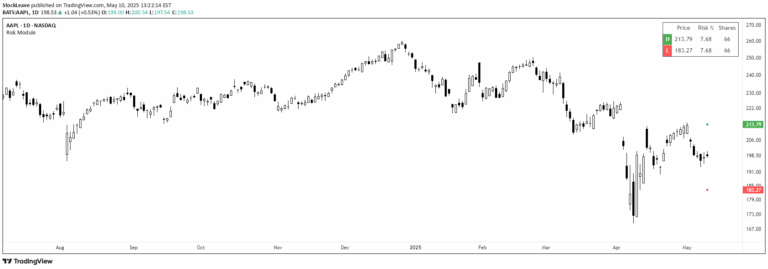
ATR Engine is a dynamic trading signal that calculates scalp targets and stop levels using Average True Range, helping traders optimize entry, exit, and risk management strategies.
Explore complementary indicator rolesHow it works
The ATR Engine uses Average True Range (ATR) to calculate trading parameters by first selecting a length and smoothing method for the ATR calculation. It computes a rolling median ATR to derive a scalp target, automatically setting it at half the median ATR and snapping to the nearest tick.
The system then calculates stop distances by scaling the current ATR with a multiplier, typically between 1.0 and 2.0 depending on market context. Traders can customize the ATR length, smoothing method, and multiplier to align with their specific trading setup and market conditions.
Why it may be useful
The ATR Engine provides traders with a systematic approach to risk management by dynamically adjusting stop levels and profit targets based on current market volatility. By using ATR, traders can create more adaptive and context-aware trading strategies that respond to changing market conditions.
This approach helps traders maintain consistent risk exposure across different market environments, preventing overly tight or excessively wide stops that could lead to premature exits or unnecessary losses.
When to explore it
The ATR Engine is most effective in markets with clear trending or ranging conditions where volatility plays a significant role in price movement. It works particularly well for traders seeking a systematic method to set stop losses and take profit levels that adapt to market dynamics.
Traders should consider using this signal during periods of moderate to high volatility, such as during important economic announcements, earnings reports, or when trading instruments known for significant price fluctuations.
Keep exploring
What we’ve verified
Access, alerts and repainting behaviour have not been independently verified for this indicator. Check the creator’s current publication and settings.
General descriptions and classifications are recovered research. Verified details above identify the specific checks we have completed. Check the creator’s current publication for later changes.