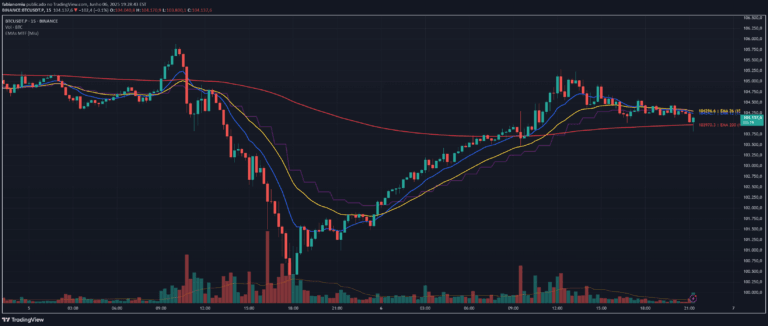
A multi-timeframe EMA indicator that identifies high-probability entry points by analyzing trend alignment across daily, 1-hour, and 15-minute charts using exponential moving averages.
Explore complementary indicator rolesHow it works
The Austin MTF EMA Entry Points indicator uses exponential moving averages (EMAs) to analyze market trends across multiple timeframes. It starts by calculating the 50 EMA on the daily chart to establish the primary trend direction, with price above the EMA indicating a bullish trend and below signaling a bearish trend.
For precise entry points, the indicator then examines the 20 EMA on both 1-hour and 15-minute charts. Buy signals are generated when the price is above the daily 50 EMA and the 20 EMAs on lower timeframes, while sell signals occur when the price is below these key moving averages.
Why it may be useful
This indicator provides traders with a comprehensive approach to trend analysis by combining multiple timeframe perspectives. It helps traders identify high-probability trade entries by ensuring alignment between different chart timeframes, reducing the likelihood of entering trades against the broader market trend.
By using EMAs as the primary analysis tool, the indicator offers a smoother, more responsive method of trend identification compared to simple moving averages. The visual markers and alerts make it easier for traders to spot potential trading opportunities and make more informed decisions.
When to explore it
The Austin MTF EMA Entry Points is most effective in trending markets where clear directional movement is present. It works best for traders who want to trade in the direction of the dominant daily trend while using lower timeframes to fine-tune entry points.
The indicator is particularly valuable for swing traders and day traders who seek to align their trades with the broader market trend. It is most suitable during periods of consistent market movement and becomes less reliable in choppy, range-bound market conditions where trend signals may be less definitive.
Keep exploring
What we’ve verified
Access, alerts and repainting behaviour have not been independently verified for this indicator. Check the creator’s current publication and settings.
General descriptions and classifications are recovered research. Verified details above identify the specific checks we have completed. Check the creator’s current publication for later changes.