
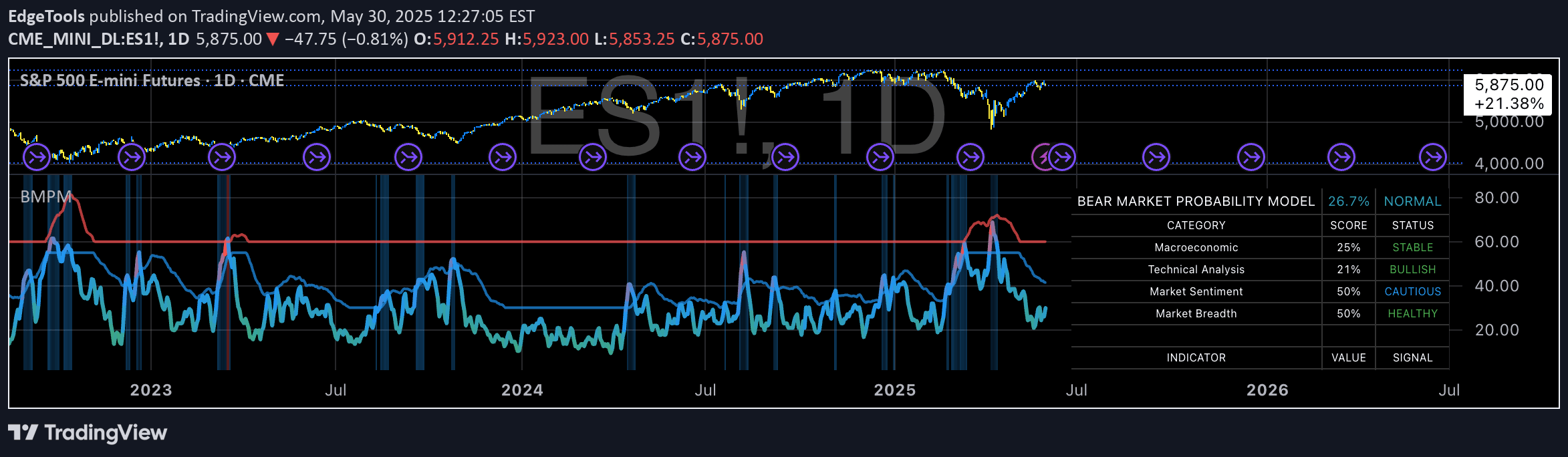
A comprehensive multi-factor quantitative model that assesses systemic market risk by integrating 13 risk factors across macroeconomic, technical, sentiment, and market breadth dimensions.
Explore complementary indicator rolesHow it works
The Bear Market Probability Model integrates 13 distinct risk factors through a weighted composite scoring methodology, calculating a probabilistic assessment of potential market downturns. Each factor is normalized and weighted, including macroeconomic indicators like yield curve analysis, credit risk premiums, and currency stress indicators.
The model mathematically synthesizes these factors using a formula that computes a bear market probability percentage. It dynamically adjusts thresholds based on market volatility, ensuring adaptive risk assessment across different market conditions and providing a comprehensive, real-time systemic risk evaluation.
Why it may be useful
The Bear Market Probability Model offers traders and investors a sophisticated, data-driven approach to understanding and anticipating potential market risks before they materialize. By combining multiple analytical perspectives, it provides a more nuanced and robust risk assessment than single-factor models, helping investors make more informed strategic decisions.
This comprehensive framework allows portfolio managers to proactively adjust investment strategies, implement hedging techniques, and manage risk exposure based on objective, quantitative metrics. Its multi-dimensional approach reduces the likelihood of being caught off-guard by sudden market shifts and provides a structured methodology for navigating complex market environments.
When to explore it
The Bear Market Probability Model is most effective during periods of market uncertainty, economic transition, or increasing systemic volatility. Traders and investors can utilize this model when seeking to assess broader market risk beyond traditional technical or fundamental analysis approaches.
The indicator becomes particularly valuable during economic inflection points, such as changes in monetary policy, significant geopolitical events, or emerging market stress conditions. Professional risk managers can leverage this model for tactical asset allocation, portfolio hedging, and developing more resilient investment strategies across different market cycles.
Keep exploring
What we’ve verified
Access, alerts and repainting behaviour have not been independently verified for this indicator. Check the creator’s current publication and settings.
General descriptions and classifications are recovered research. Verified details above identify the specific checks we have completed. Check the creator’s current publication for later changes.


