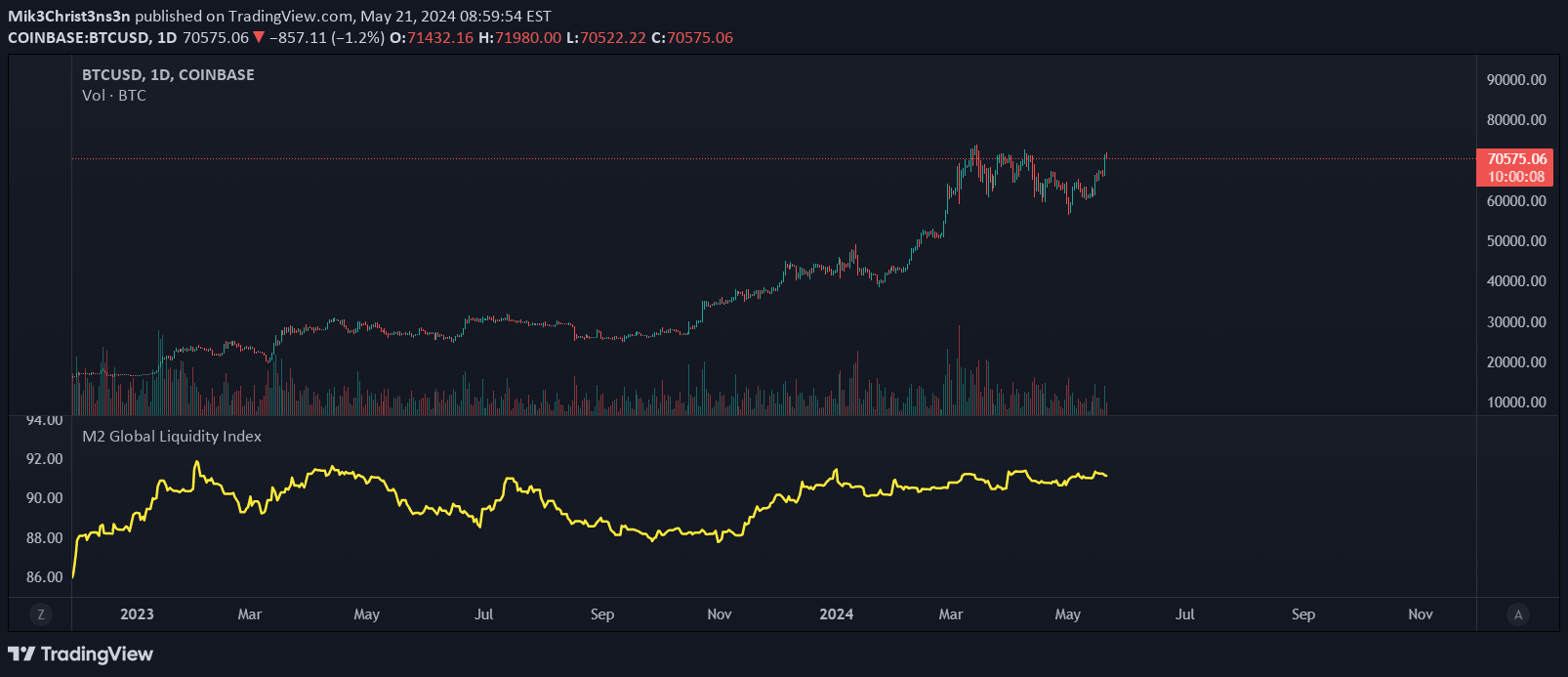
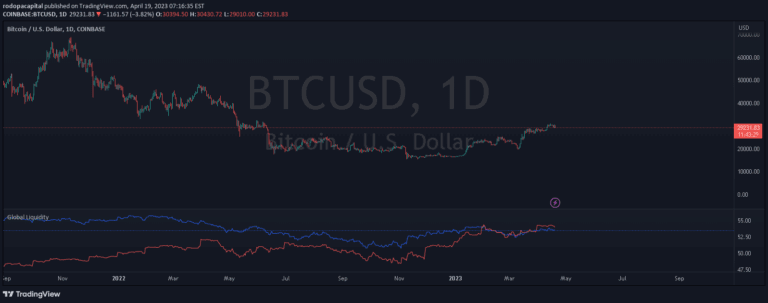
A comprehensive global liquidity index tracking mechanism that calculates money supply changes across major economies using advanced moving average techniques.
Explore complementary indicator rolesHow it works
The global liquidity index is calculated by aggregating money supply data from major economies like the United States, Europe, China, and Japan. It involves summing economic data and adjusting for financial instruments such as reverse repurchase agreements to produce a trillions-based liquidity metric.
The index then applies two advanced analytical techniques: Rate of Change (ROC) to measure liquidity speed, and Double Exponential Moving Average (DEMA) to capture trend sensitivity. These calculations help smooth data and provide a more responsive trend analysis of global monetary conditions.
Why it may be useful
Global liquidity indicators provide crucial insights into worldwide monetary dynamics, helping traders understand broader economic trends and potential market movements. By tracking money supply changes across multiple economies, traders can anticipate potential shifts in market sentiment and investment flows.
The sophisticated calculation methods like ROC and DEMA enable more nuanced interpretation of liquidity trends, offering traders a sophisticated tool for understanding complex global financial ecosystems and potential investment opportunities.
When to explore it
This signal is most effective during periods of significant economic transition or when analyzing long-term market trends across multiple economic regions. Traders can utilize it to gauge overall market sentiment and potential directional changes in global financial markets.
It works particularly well when comparing liquidity trends across different economic zones, helping identify potential investment opportunities or anticipate broader market movements. Optimal usage includes strategic investment planning, macroeconomic analysis, and understanding potential global financial shifts.
Keep exploring
What we’ve verified
Access, alerts and repainting behaviour have not been independently verified for this indicator. Check the creator’s current publication and settings.
General descriptions and classifications are recovered research. Verified details above identify the specific checks we have completed. Check the creator’s current publication for later changes.