
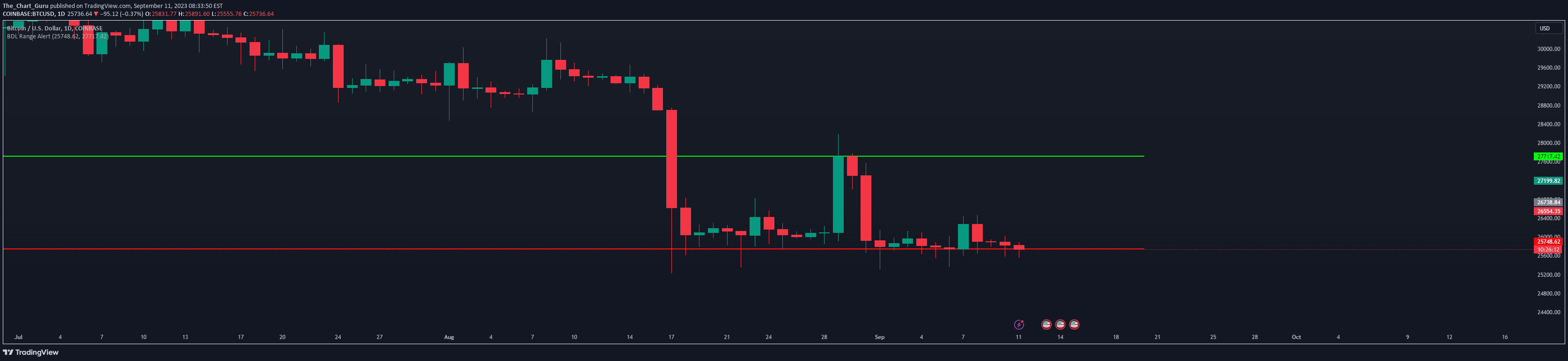
A trading indicator that allows users to define a custom range and set alerts for breakouts above or below predefined price boundaries.
Explore complementary indicator rolesHow it works
The indicator requires traders to manually select a specific price range by defining its bottom and top boundaries. Once the range is established, traders can choose from three alarm options: triggering an alert when price breaks below the bottom range, breaks above the top range, or breaks through either boundary.
The signal becomes active only after a complete candle closes outside the predefined range, which helps confirm the breakout and reduces false signals. This approach allows traders to create custom range-based trading strategies tailored to specific market conditions and their individual trading preferences.
Why it may be useful
Custom range breakout signals provide traders with a flexible tool for identifying potential trend changes and entry/exit points. By allowing manual range selection, traders can adapt the indicator to different market contexts, asset types, and trading styles.
The precise breakout confirmation mechanism helps minimize premature or false signal risks, giving traders more confidence in their trading decisions. This approach empowers traders to create personalized trading strategies that align with their risk tolerance and market interpretation.
When to explore it
This range breakout signal works best in markets with clear directional movements and definable trading ranges. It is particularly effective during periods of consolidation or when price is trading within a recognizable support and resistance zone.
Traders should use this indicator in conjunction with other technical analysis tools to validate signals and confirm potential trend reversals. It is most suitable for active traders who can monitor markets closely and make quick decisions based on breakout alerts.
Keep exploring
What we’ve verified
Access, alerts and repainting behaviour have not been independently verified for this indicator. Check the creator’s current publication and settings.
General descriptions and classifications are recovered research. Verified details above identify the specific checks we have completed. Check the creator’s current publication for later changes.


