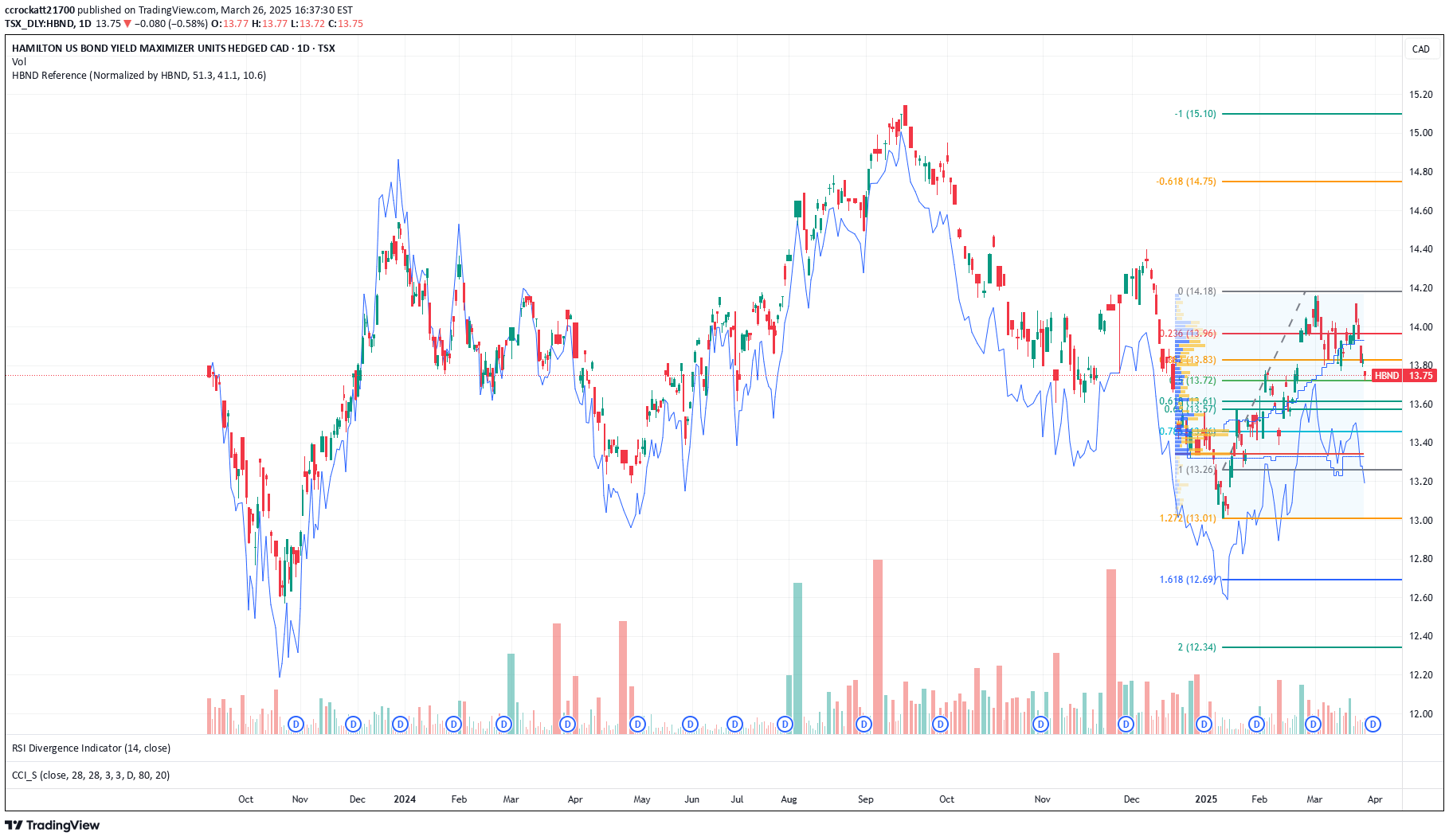
A custom index charting method for HBND that allows flexible display of high-yield bond fund performance through normalization, percentage change, or raw value calculations.
Explore complementary indicator rolesHow it works
The HBND index charting method involves creating a weighted composite of different bond ETFs by multiplying each ETF's price by its specific percentage weighting. Traders can choose between three display options: normalized relative to the primary symbol, percentage change from the first bar, or raw calculated value.
Manual updates of weightings are required to maintain accuracy. The calculation involves tracking adjusted close prices for multiple bond ETFs to create a comprehensive index representation
Why it may be useful
This charting approach provides traders with a nuanced view of high-yield bond fund performance by aggregating multiple ETF data points. It offers flexibility in visualization, allowing investors to understand complex bond market movements through different analytical lenses.
The method helps identify trends, compare relative performances, and make more informed investment decisions. By incorporating multiple bond ETFs, traders can gain a more comprehensive market perspective beyond single fund limitations
When to explore it
The HBND index method is most effective when analyzing broad bond market trends and seeking a detailed view of high-yield fixed-income investments. Traders should use this approach when comparing multiple bond ETFs, evaluating market sentiment, or developing sophisticated fixed-income strategies.
It works best during periods of market volatility, when understanding complex bond market interactions becomes crucial. Investors can leverage this method for portfolio diversification, risk assessment, and identifying potential investment opportunities
Keep exploring
What we’ve verified
Access, alerts and repainting behaviour have not been independently verified for this indicator. Check the creator’s current publication and settings.
General descriptions and classifications are recovered research. Verified details above identify the specific checks we have completed. Check the creator’s current publication for later changes.