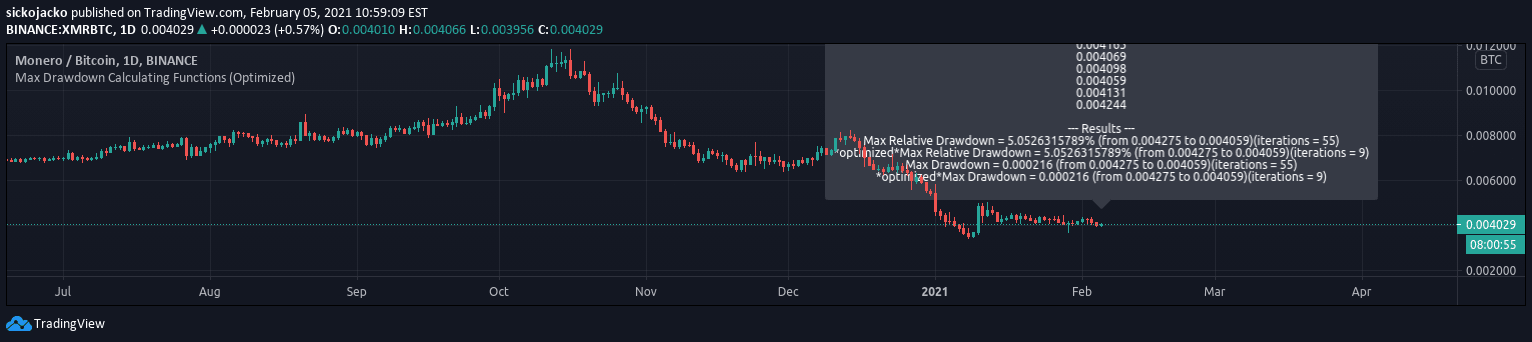
A technical analysis function for calculating maximum drawdown and relative drawdown percentage in financial data series, helping traders assess potential losses and portfolio performance.
Explore complementary indicator rolesHow it works
The maximum drawdown calculation uses two primary algorithms to analyze a series of financial data points. The first algorithm requires n*(n-1)/2 comparisons, comparing each data point with subsequent points to identify the most significant price decline.
The second, more optimized algorithm reduces computational complexity by using fewer iterations. It tracks the peak and trough values, systematically comparing price movements to determine the maximum percentage decline from a previous high point
Why it may be useful
Maximum drawdown analysis is crucial for risk management and performance evaluation in trading strategies. It helps traders understand the potential downside of an investment by measuring the largest percentage drop from a peak before a new peak is reached.
This metric provides insights into an investment's historical volatility and potential risk exposure. Traders can use this information to assess the stability of a trading strategy, compare different investment options, and make more informed decisions about portfolio allocation
When to explore it
Maximum drawdown calculations are most effective when analyzing historical price data across various timeframes and financial instruments. Traders should apply this technique when evaluating trading strategies, assessing portfolio performance, and comparing different investment options.
It is particularly useful during market volatility, when understanding potential losses becomes critical. Investors can use this method to stress-test trading algorithms, set risk management parameters, and develop more robust investment approaches
Keep exploring
What we’ve verified
Access, alerts and repainting behaviour have not been independently verified for this indicator. Check the creator’s current publication and settings.
General descriptions and classifications are recovered research. Verified details above identify the specific checks we have completed. Check the creator’s current publication for later changes.