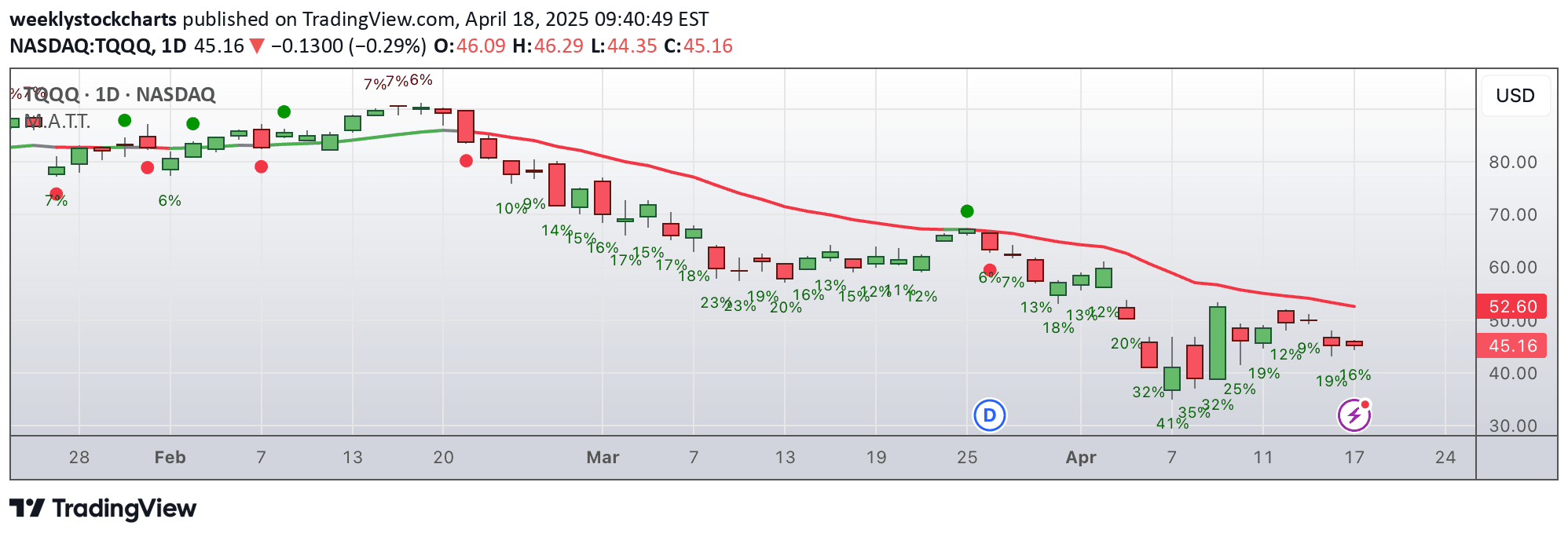
A specialized moving average technique that filters out data anomalies to generate a more accurate trendline by removing extreme values from the dataset.
Explore complementary indicator rolesHow it works
The Moving Average Threshold (MAT) begins by calculating the mean of the entire dataset to establish a baseline. It then iterates through the data points, identifying and filtering out values that deviate significantly from the calculated mean beyond a predetermined threshold. This filtering process eliminates statistical outliers that could potentially skew the overall trend analysis.
After removing the anomalous data points, the algorithm recalculates a refined mean using only the filtered dataset. This filtered mean is then passed through various moving average functions like Simple Moving Average (SMA) or Exponential Moving Average (EMA), creating a smoother and more representative trendline that accurately reflects the underlying price movement.
Why it may be useful
Traditional moving averages can be heavily influenced by extreme price movements or data anomalies, which can lead to misleading trend interpretations. By implementing a threshold-based filtering mechanism, traders can obtain a more robust and reliable representation of price trends that eliminates potential statistical noise and outliers.
The MAT approach provides traders with a more nuanced view of market dynamics, helping them make more informed trading decisions. It reduces the impact of sporadic price spikes or measurement errors, thereby offering a clearer and more consistent perspective on underlying market trends and potential trading opportunities.
When to explore it
The MAT is particularly useful in volatile markets where price data can contain significant outliers or extreme movements that might distort traditional trend analysis. It works best in financial instruments with occasional sharp price fluctuations, such as cryptocurrency, emerging market stocks, or commodities with high volatility.
Traders should consider employing the MAT during periods of market uncertainty, when standard moving averages might provide incomplete or misleading signals. It is especially beneficial for trend-following strategies that require a more refined and stable trend identification mechanism across multiple timeframes and trading styles.
Keep exploring
What we’ve verified
Access, alerts and repainting behaviour have not been independently verified for this indicator. Check the creator’s current publication and settings.
General descriptions and classifications are recovered research. Verified details above identify the specific checks we have completed. Check the creator’s current publication for later changes.