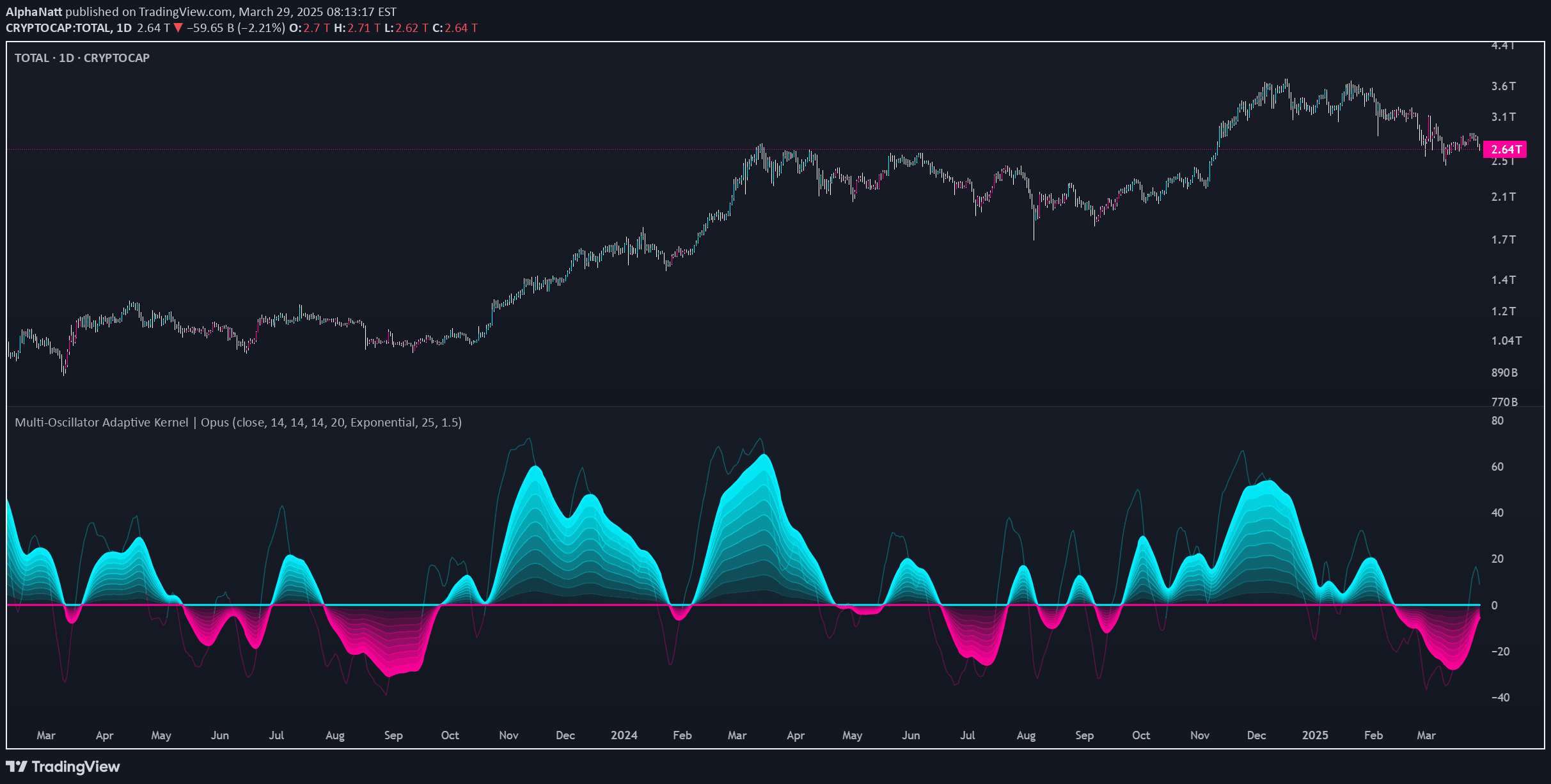
A multi-oscillator technical analysis tool that combines RSI, Stochastic, MFI, and CCI indicators with advanced kernel smoothing to generate adaptive trading signals across different market conditions.
Explore complementary indicator rolesHow it works
The Multi-Oscillator Adaptive Kernel (MOAK) works by first normalizing and combining readings from multiple oscillators: RSI, Stochastic, MFI, and CCI. These oscillators are then processed through one of three kernel functions: Exponential, Linear, or Gaussian.
The kernel smoothing helps filter out market noise and provides a more refined signal. The indicator generates two signal lines: a fast line that quickly responds to price changes and a slow line that confirms the underlying trend direction
Why it may be useful
This indicator matters because it provides traders with a comprehensive view of market momentum by integrating multiple technical indicators. By using advanced kernel smoothing, it reduces false signals and helps traders identify more reliable trend shifts.
The adaptive nature of the MOAK allows it to perform effectively across different market conditions, offering insights into potential trend reversals, overbought/oversold zones, and momentum changes
When to explore it
The MOAK is most effective in markets with clear trending or ranging characteristics. Traders should use it when seeking confirmation of trend direction across multiple timeframes.
It works best when combined with volume analysis and other technical indicators. The signal is particularly useful for identifying potential entry and exit points, especially when the indicator shows divergences between price action and momentum
Keep exploring
What we’ve verified
Access, alerts and repainting behaviour have not been independently verified for this indicator. Check the creator’s current publication and settings.
General descriptions and classifications are recovered research. Verified details above identify the specific checks we have completed. Check the creator’s current publication for later changes.