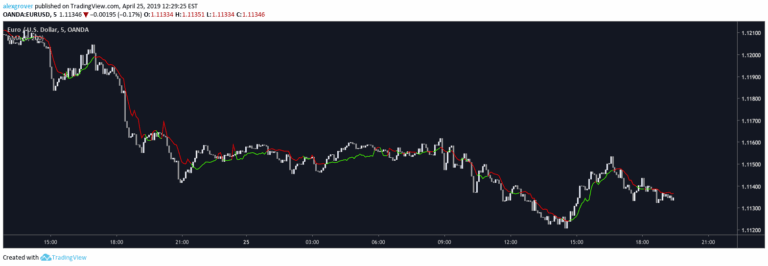
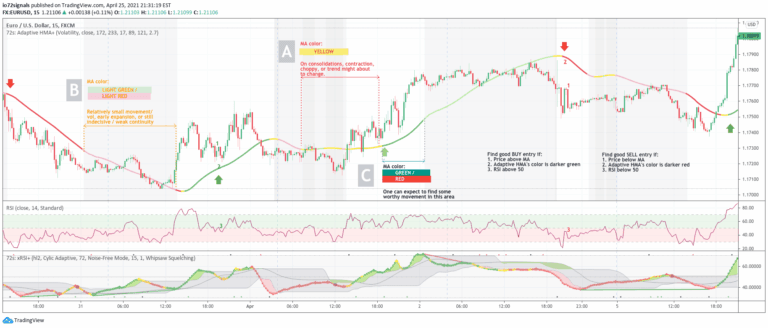
An adaptive moving average that dynamically adjusts its smoothing factor based on market volatility, tracking price movements more accurately during trending and congestion periods.
Explore complementary indicator rolesHow it works
The Adaptive Moving Average (AMA) calculates its smoothing factor dynamically by comparing price range to market effort. It uses a formula that compares the highest and lowest prices of a given period against the total true range of that period.
The smoothing factor α is computed as Result divided by Effort, where Result represents price range and Effort represents total market movement. This allows the moving average to automatically adjust its sensitivity, becoming more responsive during trending markets and less sensitive during periods of market congestion.
Why it may be useful
Traditional moving averages often struggle with changing market conditions due to their fixed parameters. The Adaptive Moving Average addresses this limitation by creating a more responsive and intelligent tracking mechanism that can adapt to different market environments.
By dynamically adjusting its smoothing factor, the AMA provides traders with a more accurate representation of price trends. This approach helps reduce lag during strong trends and prevents excessive noise during sideways or consolidating market periods, making it a more versatile analytical tool.
When to explore it
The Adaptive Moving Average is most effective in markets with varying volatility and distinct trend characteristics. It performs exceptionally well in financial instruments that experience significant directional changes and periods of consolidation, such as stocks, forex, and futures markets.
Traders should consider using this indicator when they want a more responsive trend-following tool that can quickly adapt to changing market conditions. It is particularly useful for identifying trend strength, potential reversals, and providing dynamic support and resistance levels across different timeframes.
Keep exploring
What we’ve verified
Access, alerts and repainting behaviour have not been independently verified for this indicator. Check the creator’s current publication and settings.
General descriptions and classifications are recovered research. Verified details above identify the specific checks we have completed. Check the creator’s current publication for later changes.