
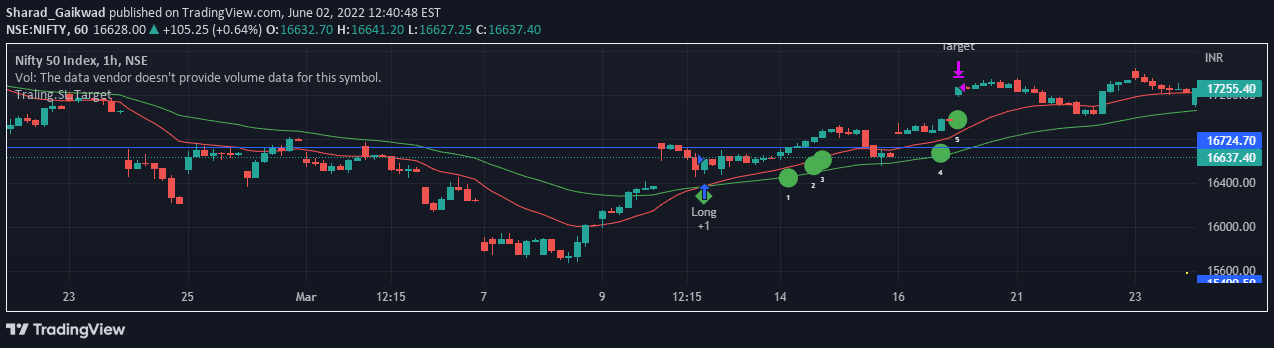
A trading strategy implementing dynamic trailing stop-loss and target mechanisms using percentage or fixed point-based calculations to manage trade entries and exits.
Explore complementary indicator rolesHow it works
The strategy uses EMA crossover as a basic entry point and implements two methods for managing trades: percentage-based and fixed point-based trailing stop-loss and target calculations. When a trade is initiated, initial profit targets and stop-loss levels are set using predefined percentages or point values.
As the trade progresses, the system dynamically adjusts these levels based on predefined trailing parameters. This allows traders to lock in profits while providing flexibility to capture more potential market movement
Why it may be useful
Trailing stop-loss and target mechanisms are crucial for risk management and optimizing trade performance. They help traders protect gains by automatically adjusting exit points as the market moves.
This approach reduces emotional decision-making and provides a systematic way to manage trades. By implementing flexible trailing parameters, traders can customize their risk tolerance and potentially improve overall trading performance and capital preservation
When to explore it
This strategy works best in trending markets with clear directional movement. It is particularly effective for traders seeking a systematic approach to trade management. The method is most suitable for assets with moderate volatility that allow for meaningful price fluctuations.
Traders should consider using this approach when they want to automate trade exit strategies, minimize emotional trading decisions, and maintain a disciplined approach to capturing market gains
Keep exploring
What we’ve verified
Access, alerts and repainting behaviour have not been independently verified for this indicator. Check the creator’s current publication and settings.
General descriptions and classifications are recovered research. Verified details above identify the specific checks we have completed. Check the creator’s current publication for later changes.


