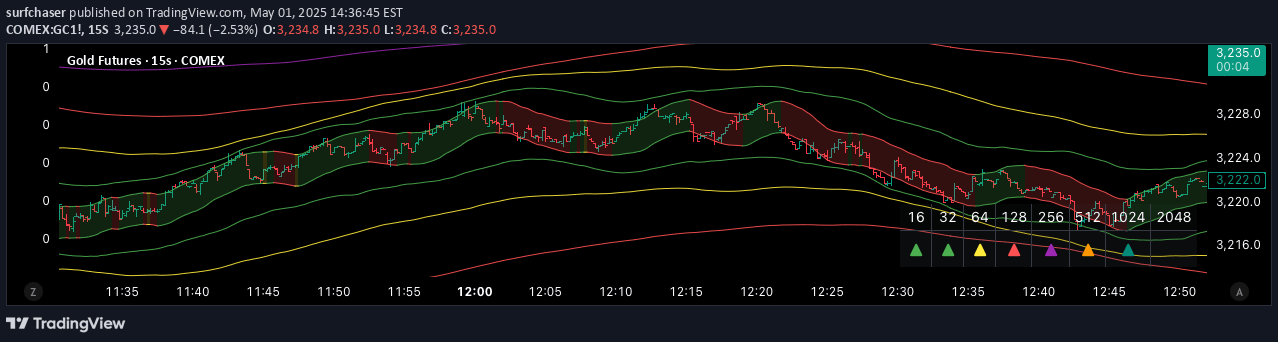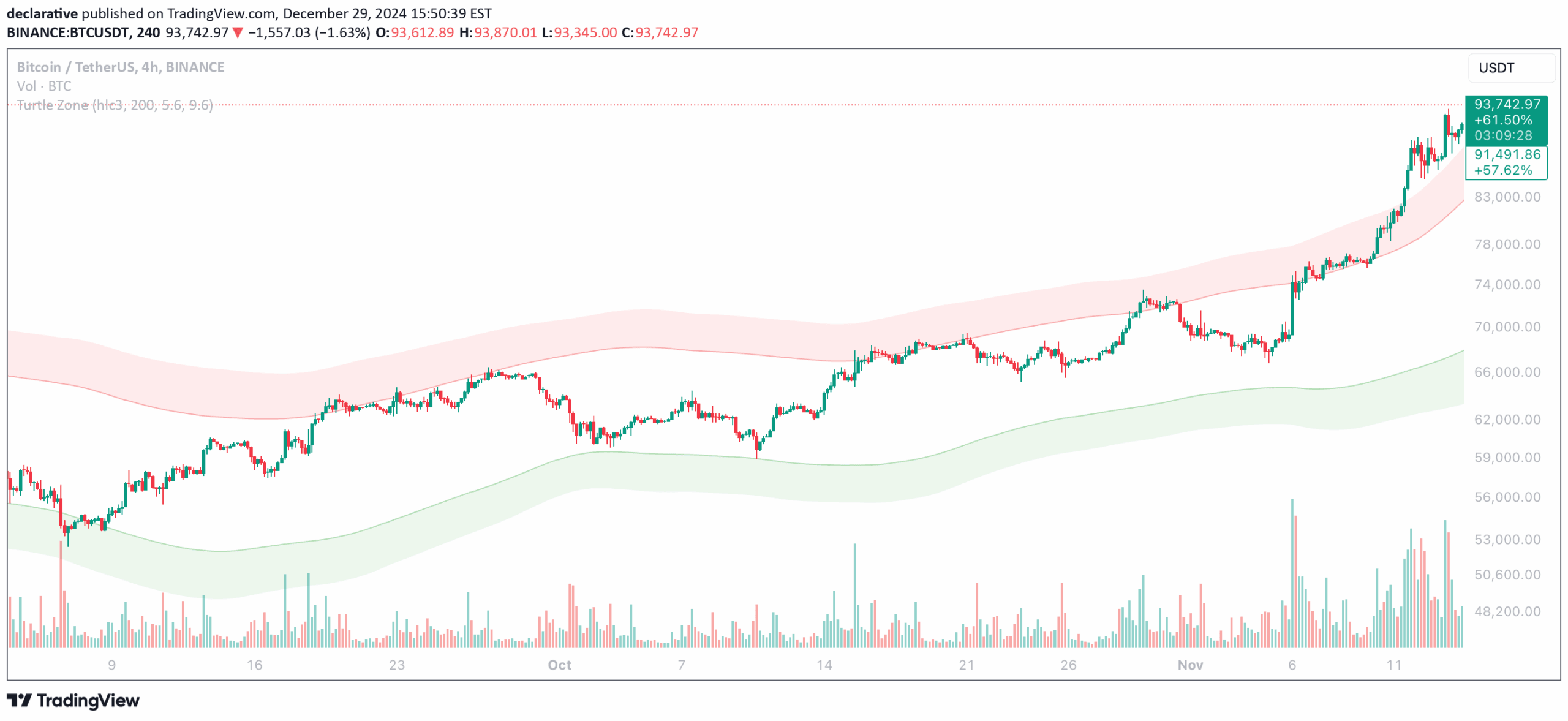
Turtle Zone is a dynamic channel indicator that uses volatility-adaptive moving average bands to identify potential support, resistance, and price movement zones.
Explore complementary indicator rolesHow it works
The Turtle Zone indicator creates a dynamic channel around a moving average, using the Average True Range (ATR) to calculate adaptive width based on current market volatility. It generates five plots: upper zone upper and lower lines, a mean line, and lower zone upper and lower lines, which are computed using logarithmic price scaling for enhanced accuracy.
The channel's width adjusts dynamically, expanding during high volatility and contracting during low volatility periods. By using a configurable lookback period and amplitude settings, traders can customize the indicator to suit different market conditions and trading styles.
Why it may be useful
The Turtle Zone indicator provides traders with a visual representation of price movement dynamics, helping them identify potential trend reversals and continuation signals. By displaying symmetrical zones around a moving average, it offers insights into market structure and potential support and resistance levels.
Its unique volatility-based approach allows traders to adapt to changing market conditions, making it a versatile tool for understanding price behavior across different timeframes and asset classes.
When to explore it
The Turtle Zone indicator is most effective in markets with clear trending behavior and moderate to high volatility. It works particularly well on larger timeframes where logarithmic price scaling can reveal more nuanced price movements and structural patterns.
Traders can leverage this indicator during trending markets to identify potential entry and exit points, using zone touches and breakouts as key signals for trade management and decision-making.
Keep exploring
What we’ve verified
Access, alerts and repainting behaviour have not been independently verified for this indicator. Check the creator’s current publication and settings.
General descriptions and classifications are recovered research. Verified details above identify the specific checks we have completed. Check the creator’s current publication for later changes.