
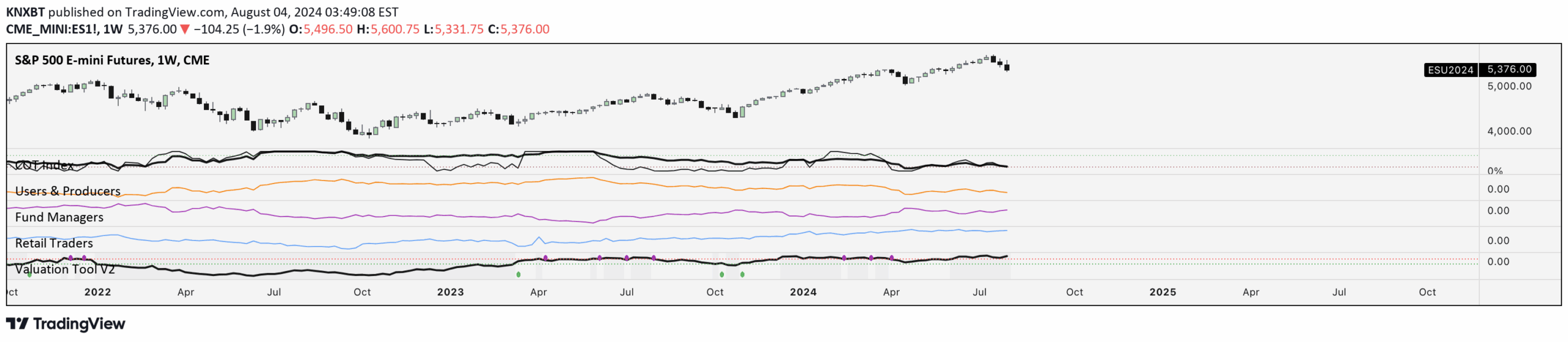
A trading signal that measures the relative valuation between equity and bond markets by calculating a normalized spread to identify overvalued and undervalued market conditions.
Explore complementary indicator rolesHow it works
The signal calculates a relative spread by dividing the equity index's closing price by the bond market's closing price. It then computes a 50-period Simple Moving Average (SMA) of this spread to establish a baseline valuation.
The normalized spread is created by comparing the current relative spread to its SMA, which transforms the data into an oscillator format. This normalized spread helps traders visualize market conditions around a zero line, with thresholds set at 10% above and below the SMA to indicate potential overvalued and undervalued states.
Why it may be useful
This signal provides a unique perspective on market valuation by comparing equity and bond markets, which can offer insights into broader economic conditions and potential market shifts. By creating a normalized oscillator, traders can quickly identify when markets might be overextended or presenting potential entry opportunities.
The methodology allows traders to understand relative market valuations beyond traditional price analysis, incorporating a more holistic view of market dynamics and potential turning points in market sentiment.
When to explore it
The signal is most effective during periods of market uncertainty or potential transition between bullish and bearish conditions. It works best for swing traders who are interested in understanding broader market valuation trends and potential longer-term market shifts.
Traders should use this signal as part of a comprehensive analysis strategy, combining it with other technical and fundamental indicators to confirm potential trading decisions and validate market perspectives.
Keep exploring
What we’ve verified
Access, alerts and repainting behaviour have not been independently verified for this indicator. Check the creator’s current publication and settings.
General descriptions and classifications are recovered research. Verified details above identify the specific checks we have completed. Check the creator’s current publication for later changes.


