
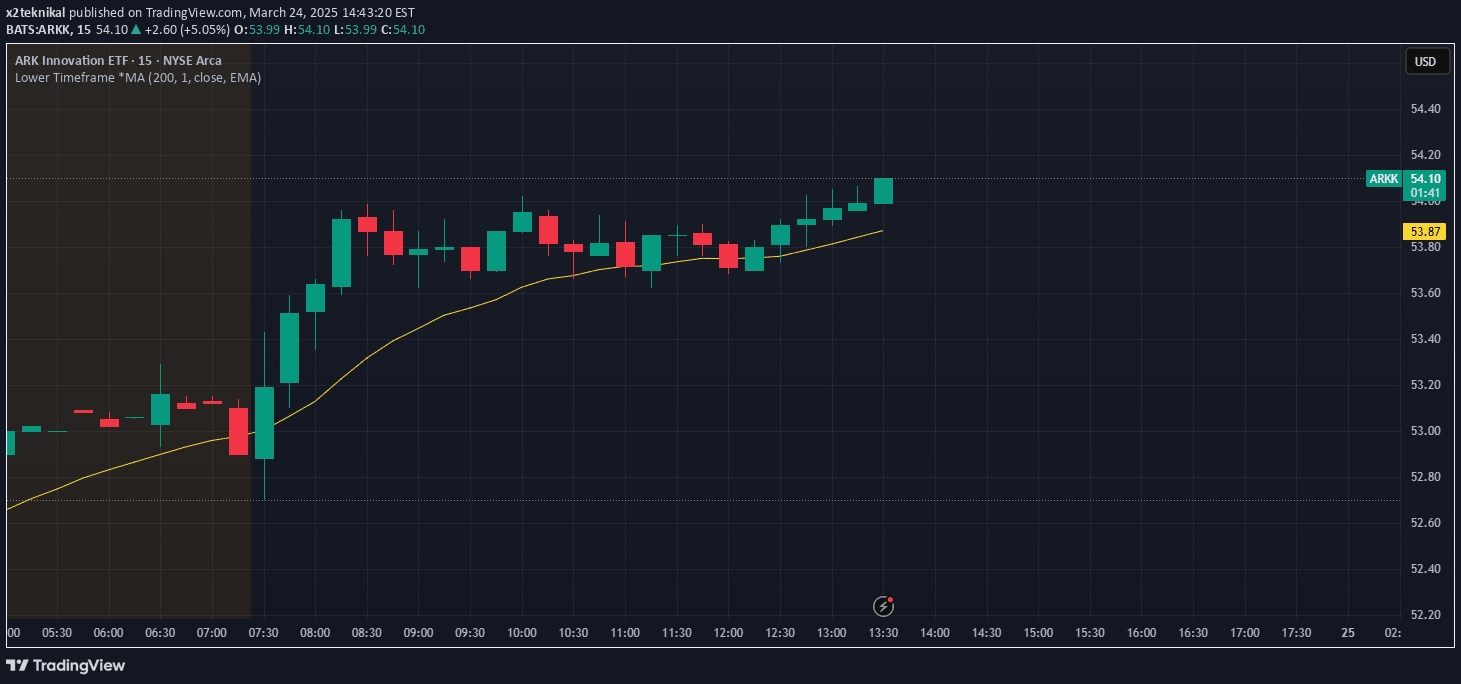
A lower timeframe moving average indicator that calculates price trends using data from smaller time periods, offering more granular insights and smoother price action across different chart timeframes.
Explore complementary indicator rolesHow it works
The lower timeframe moving average indicator calculates moving averages by using price data from a smaller timeframe than the current chart. It supports multiple moving average types like SMA, EMA, WMA, VWMA, RMA, and HMA.
Traders can select different price inputs such as close, open, high, low, hl2, hlc3, or ohlc4. The indicator automatically adjusts the moving average length based on the ratio between the current chart timeframe and the selected sub-timeframe, ensuring consistent and adaptive analysis
Why it may be useful
This indicator provides traders with more precise and responsive trend analysis by leveraging smaller timeframe data. By incorporating more granular price information, it offers earlier signals and smoother price action representation.
The flexibility to choose different moving average types and price inputs allows traders to customize their analysis according to specific trading strategies. It helps identify trend directions, potential trend changes, and provides a more nuanced view of market movements across different timeframes
When to explore it
The lower timeframe moving average indicator works best in volatile and trending markets where granular price analysis is crucial. It is particularly useful for day traders and short-term traders who need quick, responsive trend insights.
Traders should use this indicator when seeking to confirm trend directions, identify potential trend reversals, and adapt to rapidly changing market conditions. It is most effective when combined with other technical indicators and used across multiple timeframes for comprehensive market analysis
Keep exploring
What we’ve verified
Access, alerts and repainting behaviour have not been independently verified for this indicator. Check the creator’s current publication and settings.
General descriptions and classifications are recovered research. Verified details above identify the specific checks we have completed. Check the creator’s current publication for later changes.


