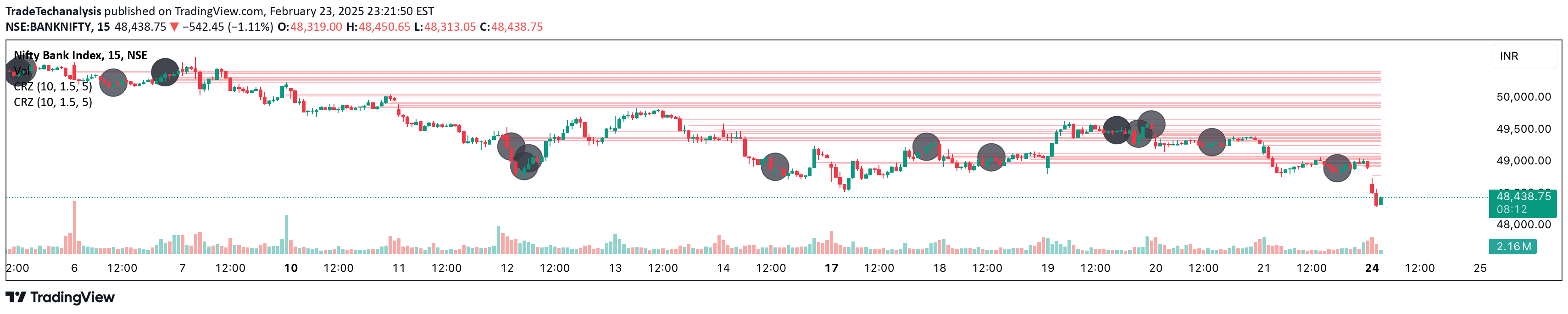
A trading strategy identifying reversal zones beyond the opening range, using fibonacci levels and entry time restrictions to generate potential trading opportunities in options.
Explore complementary indicator rolesHow it works
The signal identifies a specific trading zone by analyzing the opening range of a financial instrument and establishing defined reversal areas. It restricts trading to specific entry times and incorporates fibonacci levels to determine potential trade opportunities.
Traders monitor the 'green' and 'red' zones for potential options trades, with careful consideration of market conditions and recent momentum. The system generates alerts during the trading entry session when specific fibonacci crossovers occur, providing traders with potential entry signals.
Why it may be useful
This signal provides traders with a structured approach to identifying potential trading opportunities by combining multiple technical analysis elements. It offers a systematic method for assessing market conditions and potential reversals within a specific timeframe.
By incorporating entry time restrictions and fibonacci levels, the strategy helps traders make more informed decisions and potentially reduce random or emotional trading. The approach encourages methodical analysis and research before executing trades.
When to explore it
The signal is most effective during periods of predictable market movement, particularly for instruments like NDX, SPY, and QQQ. It works best when traders can carefully analyze market news, recent momentum, and underlying market conditions.
Traders should use this signal when they have time to conduct thorough research and are not looking for automated, blind entry points. It is particularly suitable for options traders interested in 0DTE (zero-day-to-expiration) strategies with a disciplined approach to market analysis.
Keep exploring
What we’ve verified
Access, alerts and repainting behaviour have not been independently verified for this indicator. Check the creator’s current publication and settings.
General descriptions and classifications are recovered research. Verified details above identify the specific checks we have completed. Check the creator’s current publication for later changes.