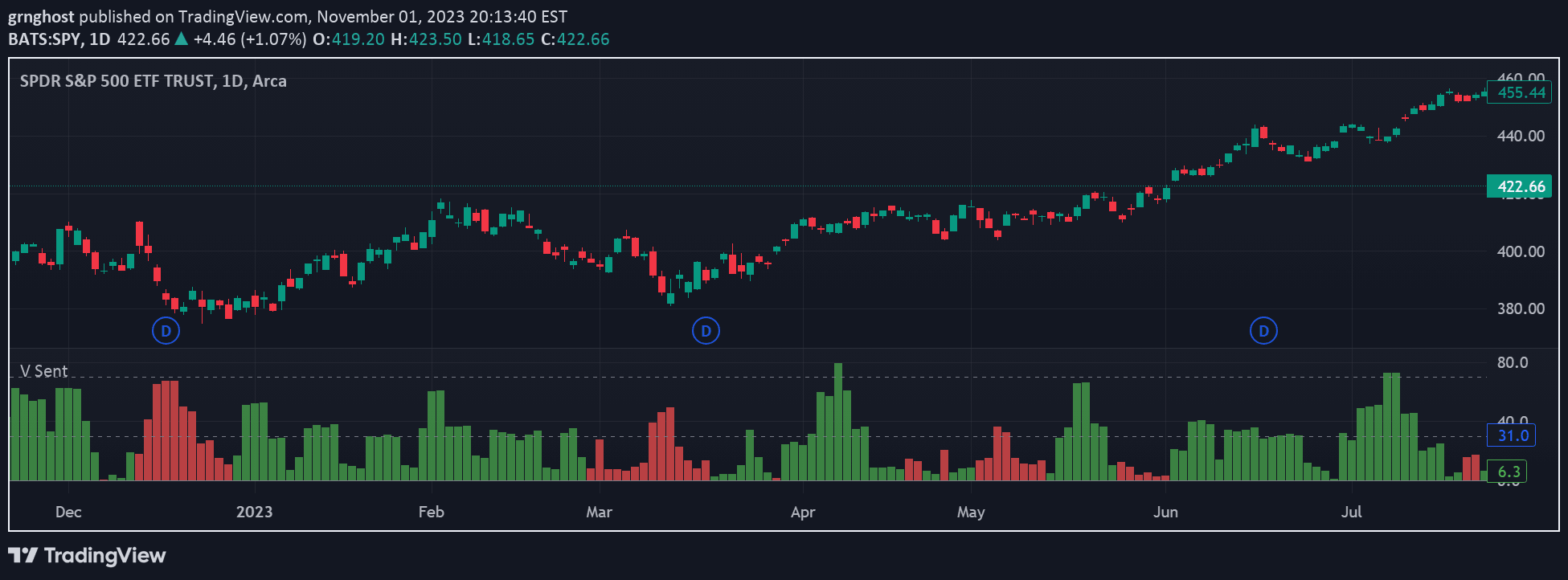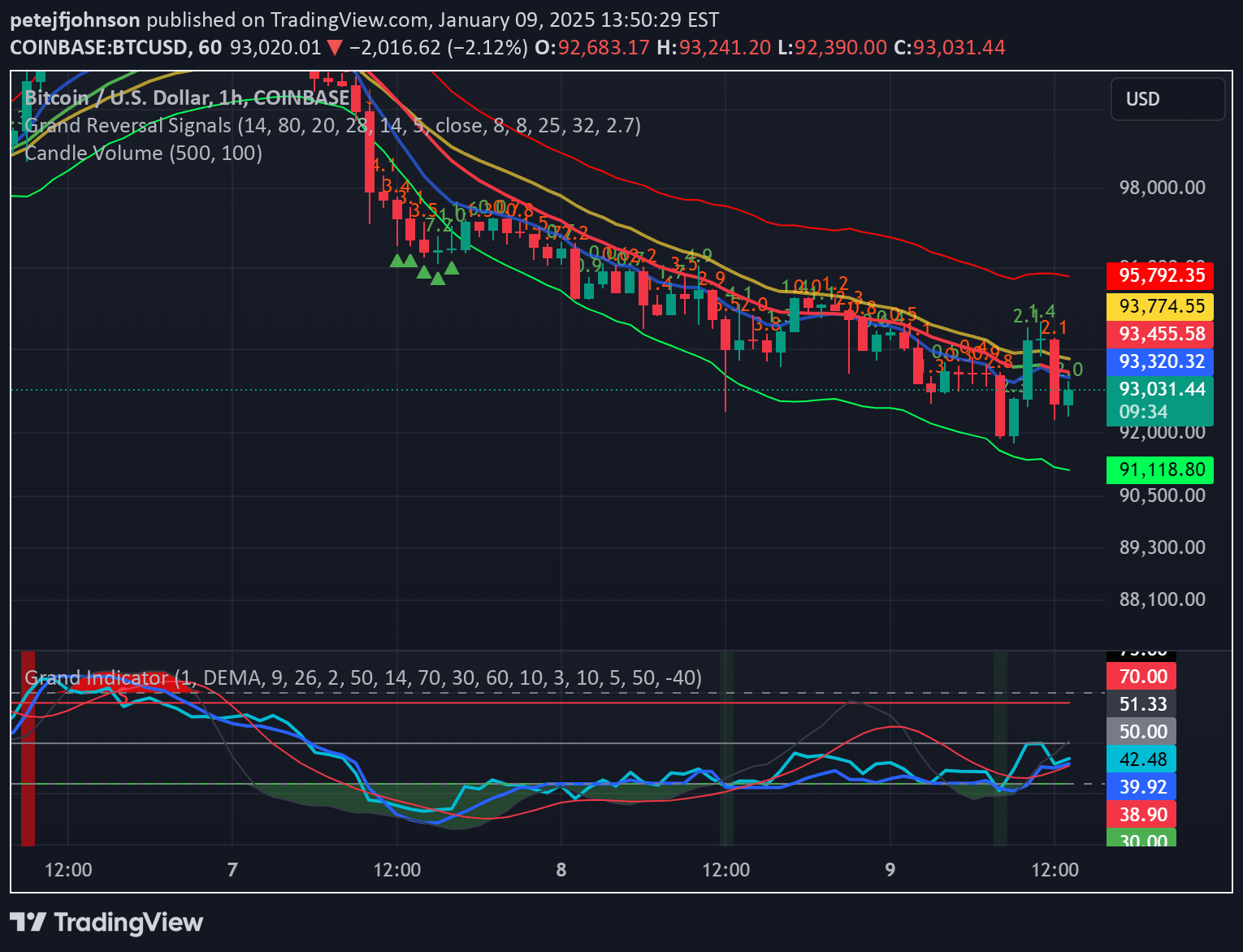
A volume indicator that represents trading volume in X.Y format, with candle volume percentage standardized and directional arrows based on price delta.
Explore complementary indicator rolesHow it works
The volume indicator calculates trading volume using a standardized percentage format, where 100% equals 1.0 and 20% equals 0.2. It uses a default 500-candle lookback period to assess volume trends, systematically excluding extreme outliers over 50.
When volume reaches significant levels, typically 10X the standard volume, the indicator adds directional arrows to represent price movement. These arrows are determined by comparing the candle's open and close prices, providing a quick visual representation of price momentum alongside volume information.
Why it may be useful
This volume indicator offers traders a simplified and standardized way to interpret trading volume across different market conditions. By normalizing volume percentages and using a consistent representation, traders can quickly assess market activity and potential momentum shifts.
The directional arrows provide an additional layer of insight, helping traders understand not just volume magnitude but also the associated price movement. This can be crucial for identifying potential trend confirmations or reversals in fast-moving market environments.
When to explore it
The volume indicator is most effective during periods of active trading with significant market movement. It works best in liquid markets where volume can provide meaningful insights into trader sentiment and potential price trends.
Traders should use this indicator in conjunction with other technical analysis tools to confirm signals and avoid false positives. It is particularly useful for scalping and day trading strategies where rapid volume and price changes can indicate short-term trading opportunities.
Keep exploring
What we’ve verified
Access, alerts and repainting behaviour have not been independently verified for this indicator. Check the creator’s current publication and settings.
General descriptions and classifications are recovered research. Verified details above identify the specific checks we have completed. Check the creator’s current publication for later changes.