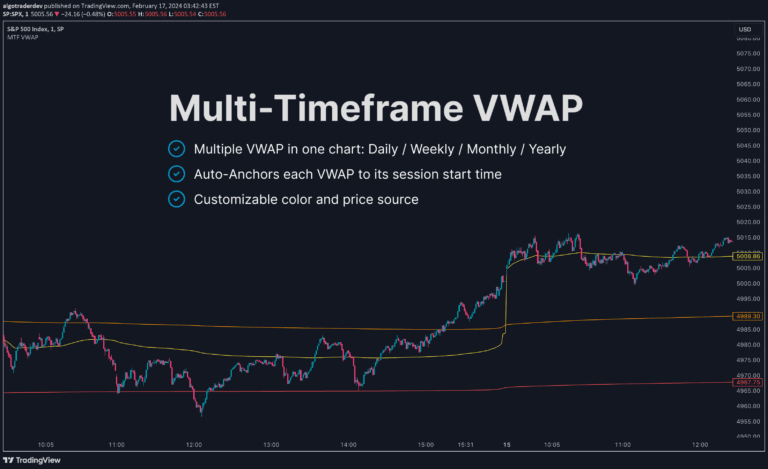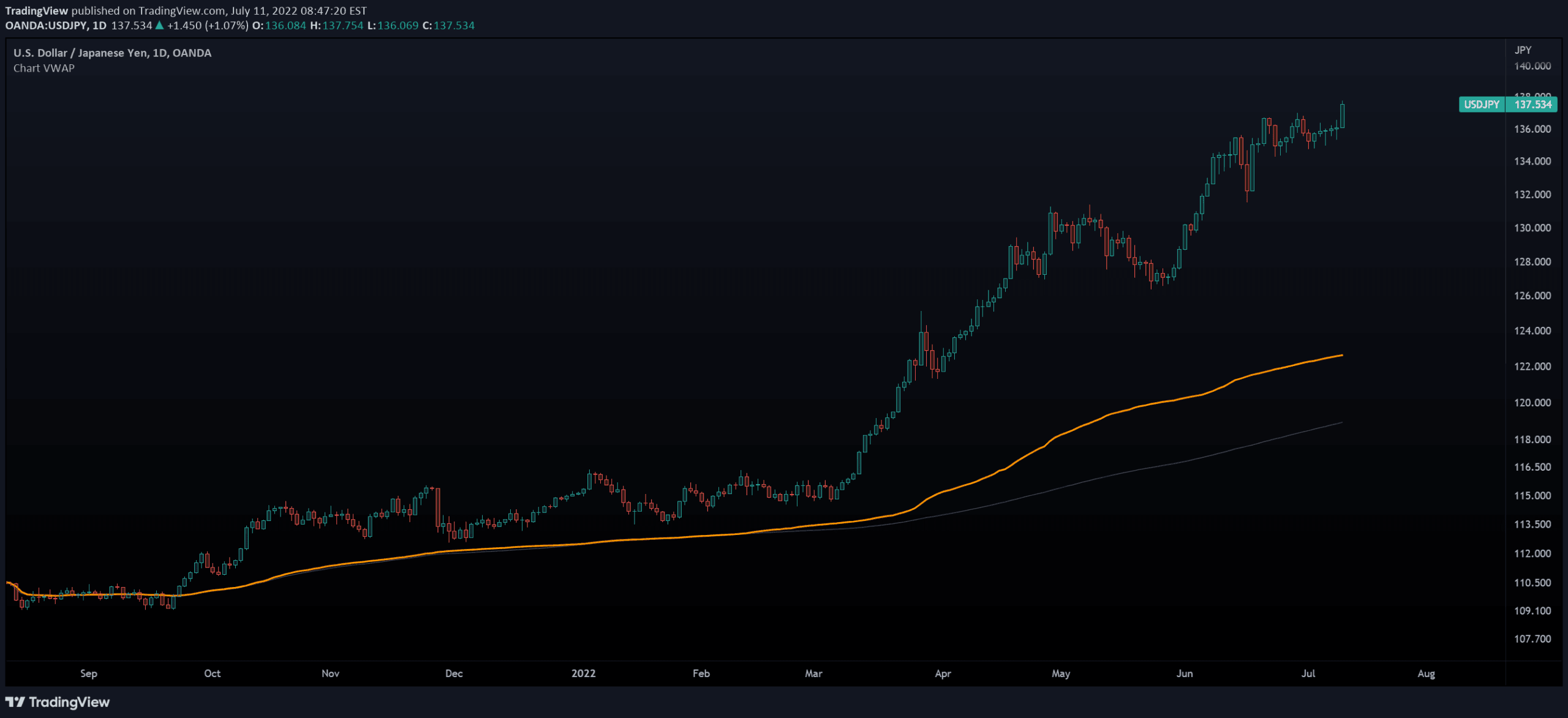
A dynamic Volume-Weighted Average Price (VWAP) indicator that calculates on visible chart bars, offering traders a flexible way to analyze price movement and volume across different chart views.
Explore complementary indicator rolesHow it works
The Rolling VWAP indicator calculates the volume-weighted average price dynamically based on the visible bars in a chart. It uses volume and price data to compute a weighted average that adjusts as traders scroll or zoom their chart.
The indicator anchors to the leftmost visible bar and recalculates in real-time. It also provides optional displays of OHLC levels and high/low values. The script leverages new Pine Script features like chart.left_visible_bar_time to enable dynamic recalculation
Why it may be useful
The Rolling VWAP helps traders understand price momentum and volume dynamics across different chart views. By dynamically adjusting to visible bars, it provides more flexible insights than traditional daily VWAP.
Traders can quickly identify price trends, compare current price to weighted average, and assess market sentiment. The indicator offers visual cues about price concentration and volume distribution. It can help confirm trend strength and potential reversal points
When to explore it
The Rolling VWAP is most effective during active trading sessions with consistent volume. It works best for intraday and swing trading strategies across different timeframes.
Traders should use it when analyzing markets with clear volume trends and when seeking a dynamic price reference point. It is particularly useful in volatile markets where traditional VWAP might not capture recent price movements. Ideal for stocks, forex, and futures with reliable volume data
Keep exploring
What we’ve verified
Access, alerts and repainting behaviour have not been independently verified for this indicator. Check the creator’s current publication and settings.
General descriptions and classifications are recovered research. Verified details above identify the specific checks we have completed. Check the creator’s current publication for later changes.