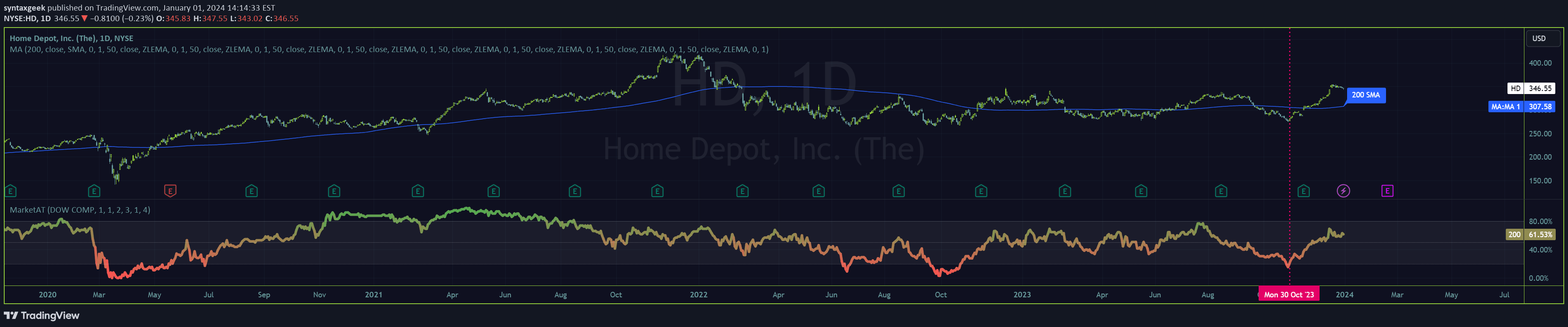
A chart background color indicator that helps traders identify market trend direction by analyzing price, moving averages, and market breadth on daily charts.
Explore complementary indicator rolesHow it works
The indicator analyzes multiple technical factors to determine market trend strength, primarily using the QQQ graph as a reference point. It checks specific conditions including price relative to the 20-day exponential moving average (EMA), net new highs, and the relationship between 10-day and 20-day EMAs.
When these conditions are met, the chart background changes color, providing a quick visual representation of market trend. Green indicates bullish conditions, while red suggests bearish market sentiment, allowing traders to quickly assess overall market direction.
Why it may be useful
This indicator helps traders overcome psychological biases like FOMO by providing a clear, objective view of market trends. It allows traders to make more disciplined decisions by offering an immediate visual cue about market conditions, reducing emotional trading.
By focusing on key technical indicators and market breadth, the tool provides a smoother, noise-reduced method of trend identification. This approach helps traders wait for confirmed trend momentum before entering trades, potentially improving overall trading strategy and risk management.
When to explore it
The indicator is most effective when used on daily charts for swing trading strategies. It is particularly useful for traders looking to identify broader market trends and confirm market direction before entering trades.
Traders should use this tool when seeking to understand overall market sentiment, especially when planning break-out or trend-following trades. It is most valuable for traders who want a quick, visual method to assess market conditions and reduce impulsive trading decisions.
Keep exploring
What we’ve verified
Access, alerts and repainting behaviour have not been independently verified for this indicator. Check the creator’s current publication and settings.
General descriptions and classifications are recovered research. Verified details above identify the specific checks we have completed. Check the creator’s current publication for later changes.