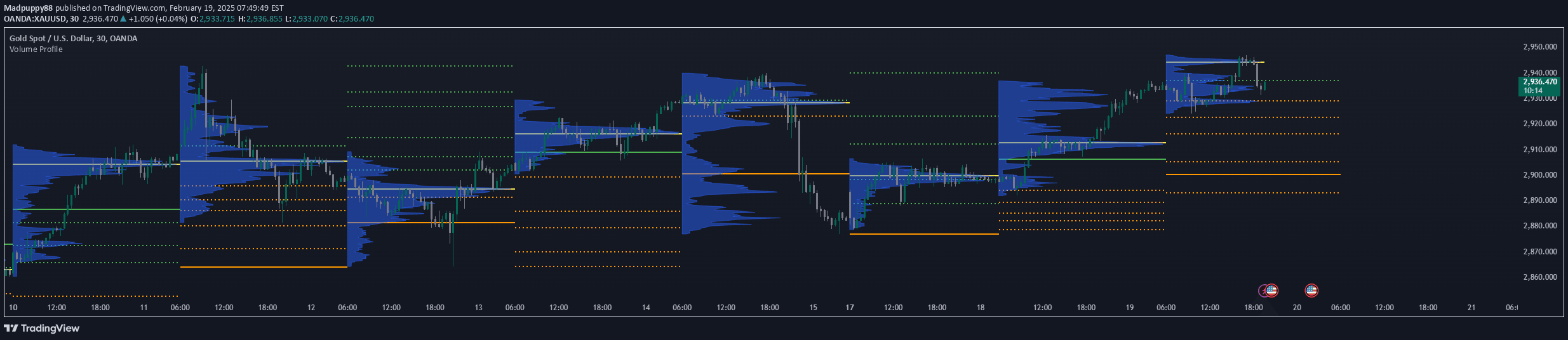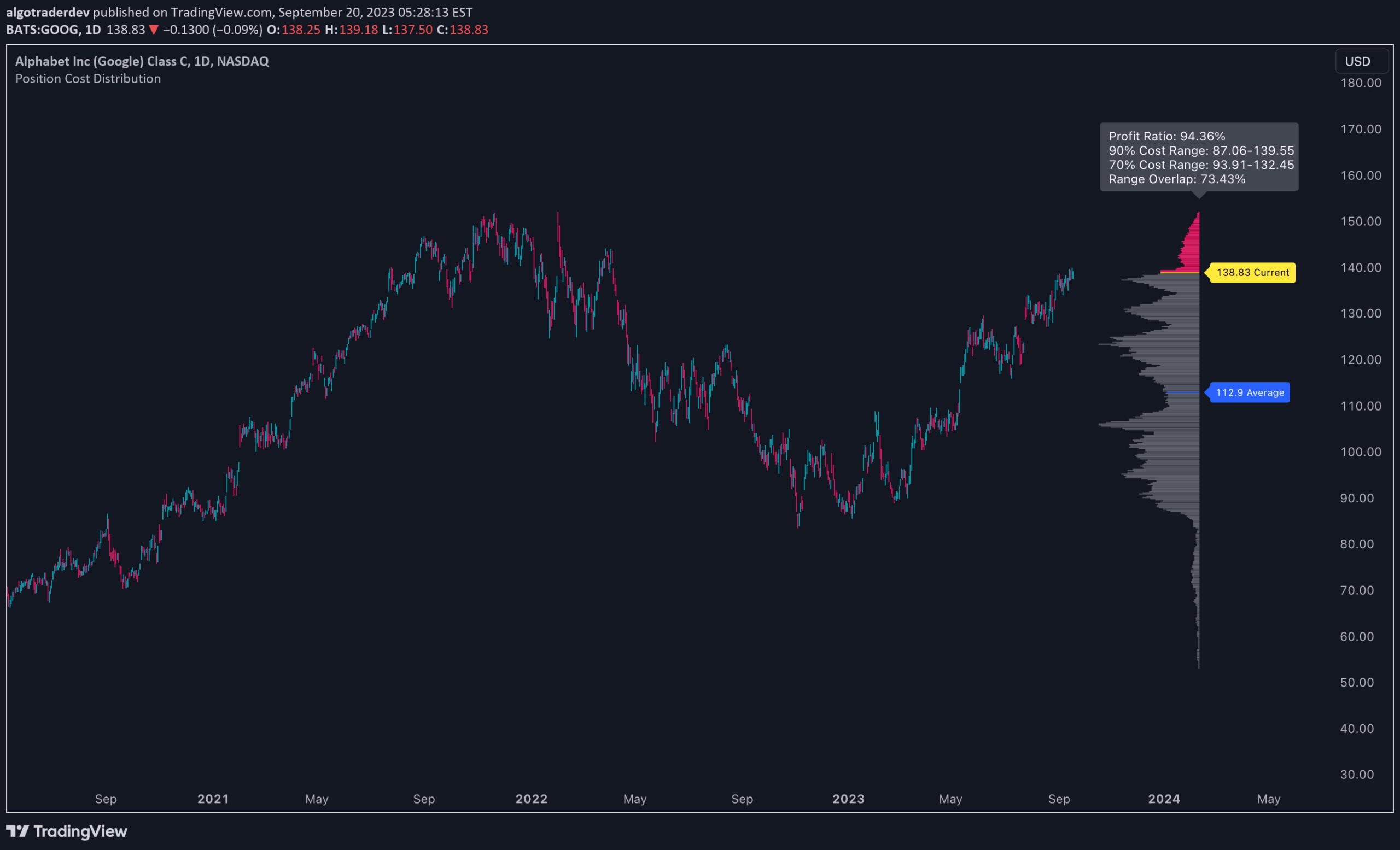
Position Cost Distribution estimates share allocation across price levels by tracking daily trade volume and inferring share transfers between price ranges.
Explore complementary indicator rolesHow it works
The Position Cost Distribution algorithm tracks share distribution by analyzing daily trading volume and prior distribution patterns. It initially allocates shares to the first chart's price range, then calculates daily turnover ratios by dividing trading volume by total outstanding shares.
For each price level, the indicator reduces shares by the turnover amount and redistributes total volume across corresponding price buckets. The model assumes equal probability of share exchange, regardless of historical purchase timing
Why it may be useful
This indicator provides traders with critical insights into potential market support and resistance zones by revealing share concentration across different price levels. By understanding how shares are distributed, traders can better anticipate potential buying and selling pressures.
The algorithm helps visualize market structure from a positional perspective, complementing traditional volume analysis. It offers a unique lens for examining potential price inflection points and understanding underlying market dynamics
When to explore it
Position Cost Distribution works best when analyzing longer-term market trends and evaluating potential support/resistance levels. It is most effective on stocks with stable share counts and consistent trading volumes.
Traders should apply this indicator when seeking deeper insights into market structure beyond traditional volume analysis. It is particularly useful for swing traders looking to understand potential price consolidation zones and long-term trend confirmations
Keep exploring
What we’ve verified
Access, alerts and repainting behaviour have not been independently verified for this indicator. Check the creator’s current publication and settings.
General descriptions and classifications are recovered research. Verified details above identify the specific checks we have completed. Check the creator’s current publication for later changes.