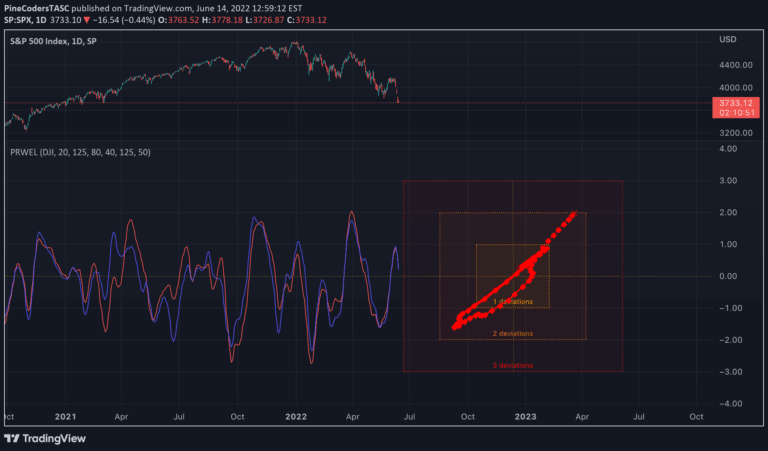
A refined Ultimate Oscillator designed by John F. Ehlers to reduce lag and enhance momentum responsiveness by measuring differences between two highpass filters.
Explore complementary indicator rolesHow it works
The indicator works by combining two highpass filters with different critical periods to create a responsive momentum oscillator. It calculates the difference between two highpass filters (HP1 and HP2) and divides this by the root mean square (RMS) to standardize the output.
The first highpass filter captures longer wavelengths, while the second captures shorter wavelengths. By measuring the difference between these filters, the oscillator creates a bandpass-like signal that emphasizes specific frequency ranges in price movement
Why it may be useful
This momentum indicator is crucial because it addresses a common problem in technical analysis: indicator lag. By carefully filtering price data, traders can obtain a more responsive view of market momentum.
The oscillator helps identify trend strength and potential trend changes more quickly than traditional indicators. Its unique design allows traders to see momentum shifts with greater clarity, reducing the delay between actual price movement and the indicator's signal
When to explore it
The Ultimate Oscillator works best in markets with clear trend movements and when traders want to capture early momentum signals. It is particularly useful in swing trading and day trading scenarios where quick identification of trend changes is critical.
Traders should use this indicator in conjunction with other technical analysis tools to confirm signals. It performs exceptionally well in markets with moderate volatility and during trending market conditions
Keep exploring
What we’ve verified
Access, alerts and repainting behaviour have not been independently verified for this indicator. Check the creator’s current publication and settings.
General descriptions and classifications are recovered research. Verified details above identify the specific checks we have completed. Check the creator’s current publication for later changes.