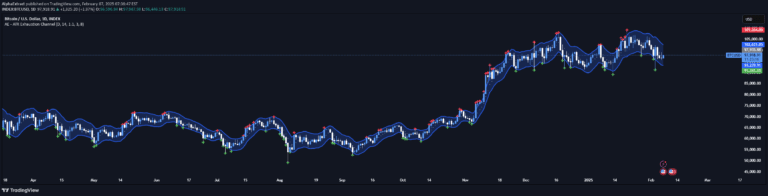
A unique stochastic-like oscillator that combines zigzag pivot points and exponential smoothing to analyze price momentum and identify potential trend reversals.
Explore complementary indicator rolesHow it works
The Zig Zag Stochastic indicator begins by identifying pivot high and pivot low points in the price data using the Zigzag method. It calculates a scale_price, which represents the current close price's ratio to the range between the current pivot high and low points.
The scale_price is then smoothed using exponential smoothing, with a default length of 14 or an automatically calculated optimal smoothing length. From this smoothed scale_price, two lines are generated: the K-line and the D-line, both of which undergo additional exponential smoothing to create a refined oscillator.
Why it may be useful
The Zig Zag Stochastic provides traders with a nuanced view of market momentum by combining pivot point analysis with smoothing techniques. This approach helps identify potential trend reversals and market sentiment more accurately than traditional stochastic oscillators.
By using both pivot points and exponential smoothing, the indicator offers a more sophisticated method of detecting overbought and oversold conditions. The inclusion of horizontal lines at 80 and 20 levels further assists traders in making informed decisions about potential entry and exit points.
When to explore it
The Zig Zag Stochastic is most effective in markets with clear trending and counter-trending movements, making it valuable across various timeframes and asset classes. It works particularly well in identifying potential trend reversals and momentum shifts in both trending and ranging markets.
Traders should use this indicator in conjunction with other technical analysis tools to confirm signals and reduce false positives. It is especially useful in volatile markets where traditional oscillators might generate less reliable signals, providing a more dynamic and adaptive approach to momentum analysis.
Keep exploring
What we’ve verified
Access, alerts and repainting behaviour have not been independently verified for this indicator. Check the creator’s current publication and settings.
General descriptions and classifications are recovered research. Verified details above identify the specific checks we have completed. Check the creator’s current publication for later changes.