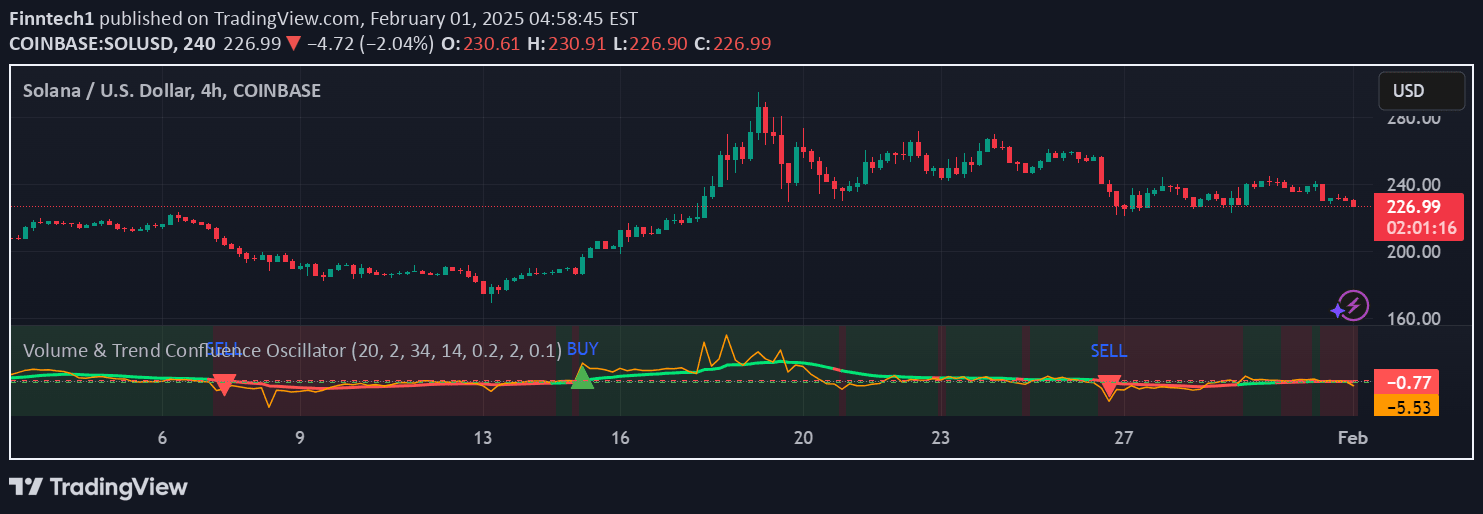
Aggressor volume imbalance measures the ratio of market buy to sell volumes, revealing trader sentiment and potential price momentum through volume-based analysis.
Explore complementary indicator rolesHow it works
The aggressor volume imbalance calculates the ratio between market buy and sell volumes by subtracting sell volume from buy volume and dividing by their total volume. This calculation is performed across a selected session timeframe, resulting in a percentage that represents the market's directional sentiment.
The indicator uses historical lower timeframe data to compute volume imbalances and resets to zero at the start of each new session. By tracking the aggressive trading volume, it provides insights into the intensity of buying or selling pressure in the market.
Why it may be useful
Aggressor volume imbalance helps traders understand market sentiment by revealing the relative strength of buying and selling pressures. It provides a quantitative measure of market participant behavior, allowing traders to gauge potential price momentum and market direction.
By analyzing the volume imbalance, traders can identify potential trend reversals, confirm existing trends, and assess the likelihood of price continuation. This metric offers a unique perspective on market dynamics that goes beyond simple price movement.
When to explore it
The indicator is most effective when used on lower timeframes, particularly in fast-moving markets where volume data can provide quick insights into market sentiment. Traders should focus on significant imbalances that indicate strong directional interest from market participants.
It works best during active trading sessions with high liquidity, such as major market hours, where volume data is most representative. Combining this indicator with other technical analysis tools can provide more comprehensive trading signals and improve decision-making accuracy.
Keep exploring
What we’ve verified
Access, alerts and repainting behaviour have not been independently verified for this indicator. Check the creator’s current publication and settings.
General descriptions and classifications are recovered research. Verified details above identify the specific checks we have completed. Check the creator’s current publication for later changes.