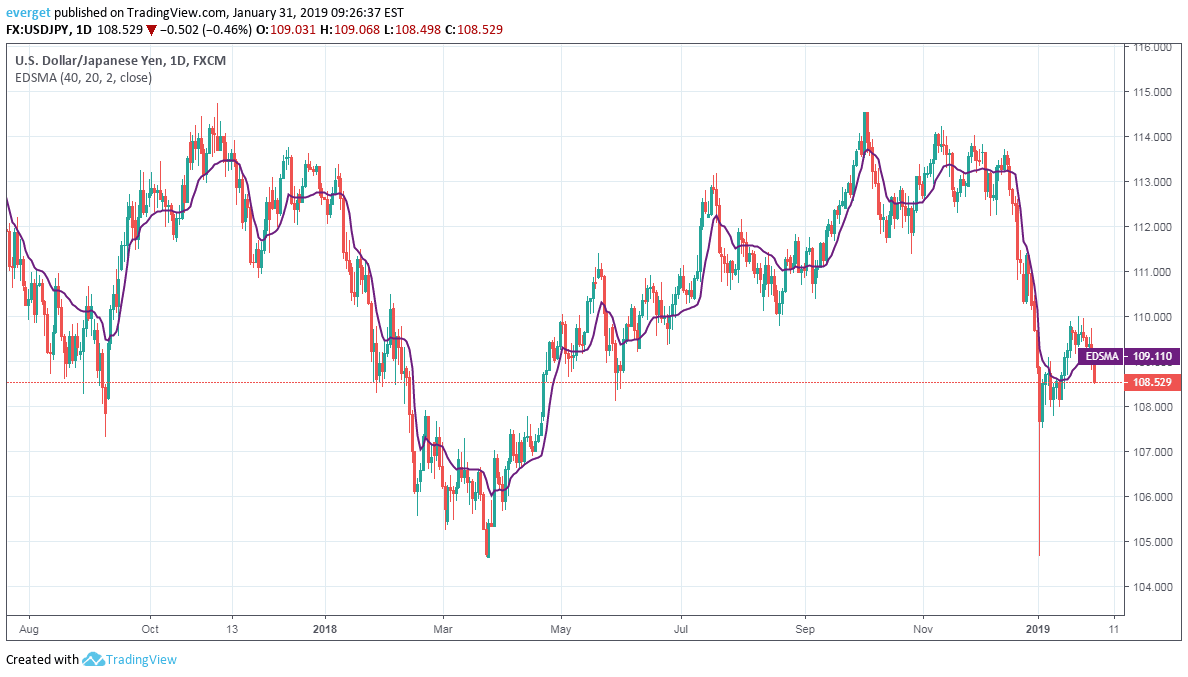
Ehlers Deviation-Scaled Moving Average is an advanced technical indicator that adjusts moving average calculations by incorporating price deviation scaling for more responsive trend analysis.
Explore complementary indicator rolesHow it works
The Ehlers Deviation-Scaled Moving Average calculates moving averages by dynamically scaling the calculation based on recent price deviations. It uses statistical measures of price movement to adjust the smoothing process, making the moving average more responsive to changing market conditions.
The indicator first determines the standard deviation of recent price movements, then uses this information to modify traditional moving average calculations. By integrating price volatility into the smoothing process, it creates a more adaptive trend-following tool. This approach helps reduce lag and improves the moving average's sensitivity to market changes
Why it may be useful
This indicator provides traders with a more sophisticated trend analysis tool that adapts to market volatility. Traditional moving averages can be slow to respond to price changes, but the Ehlers method incorporates real-time deviation scaling to create a more responsive signal.
By dynamically adjusting to price volatility, it offers more precise trend identification and potential entry/exit points. Traders can benefit from a smoother, more adaptive trend indicator that responds more quickly to market shifts. The approach helps reduce false signals and provides a more nuanced view of market momentum
When to explore it
The Ehlers Deviation-Scaled Moving Average works best in markets with moderate to high volatility where traditional moving averages might produce lagging signals. It is particularly effective in trending markets with significant price movements across various timeframes.
Traders should use this indicator in conjunction with other technical analysis tools to confirm signals and reduce false positives. It is most suitable for traders seeking a more responsive trend-following method that adapts to changing market conditions. Cryptocurrency, forex, and stock markets with substantial price fluctuations can benefit most from this approach
Keep exploring
What we’ve verified
Access, alerts and repainting behaviour have not been independently verified for this indicator. Check the creator’s current publication and settings.
General descriptions and classifications are recovered research. Verified details above identify the specific checks we have completed. Check the creator’s current publication for later changes.