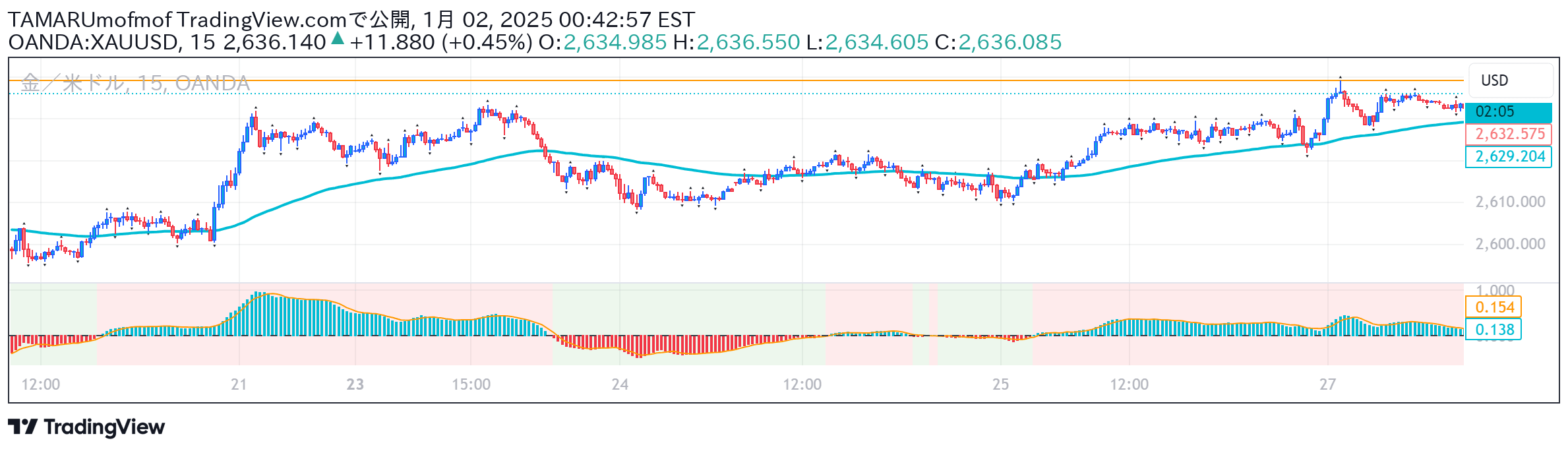
A specialized oscillator that tracks EMA divergence and momentum by plotting histogram bars and a delta line, revealing trend strength and potential shifts in real-time trading dynamics.
Explore complementary indicator rolesHow it works
The EMA Distance Oscillator operates by comparing two sets of exponential moving averages (EMAs) to generate visual momentum signals. The primary histogram plots the difference between a longer and shorter EMA pair, color-coded to indicate trend direction.
A secondary delta line tracks another EMA pair's spread, providing smoother momentum insights. The histogram changes color based on whether the EMA spread is above or below zero, and whether the spread is expanding or contracting. The delta line shifts between white and gray to represent spread widening or tightening
Why it may be useful
Traders need real-time insight into trend dynamics, and this oscillator provides a nuanced view of momentum shifts. By visualizing EMA divergence and convergence, it helps identify potential trend reversals before they become obvious.
The color-coded displays make it easy to quickly assess market conditions, showing whether momentum is increasing or decreasing. This tool bridges the gap between raw price action and interpretable trend signals, allowing traders to make more informed decisions about entry and exit points
When to explore it
The EMA Distance Oscillator works best on short-term timeframes like 1-5 minute charts, particularly for active day traders. It's most effective in markets with clear trending characteristics, such as major stock indices or liquid currency pairs.
Traders should use it alongside other confirmation indicators to validate signals. The oscillator is particularly useful during periods of market transition, helping identify potential trend changes before they fully manifest. It's less reliable in choppy, range-bound markets where momentum signals can be inconsistent
Keep exploring
What we’ve verified
Access, alerts and repainting behaviour have not been independently verified for this indicator. Check the creator’s current publication and settings.
General descriptions and classifications are recovered research. Verified details above identify the specific checks we have completed. Check the creator’s current publication for later changes.