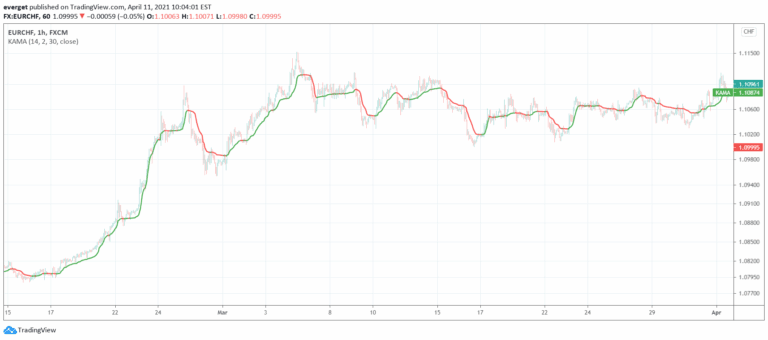
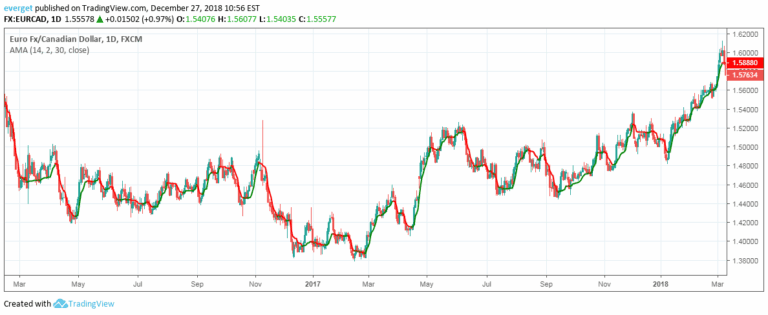
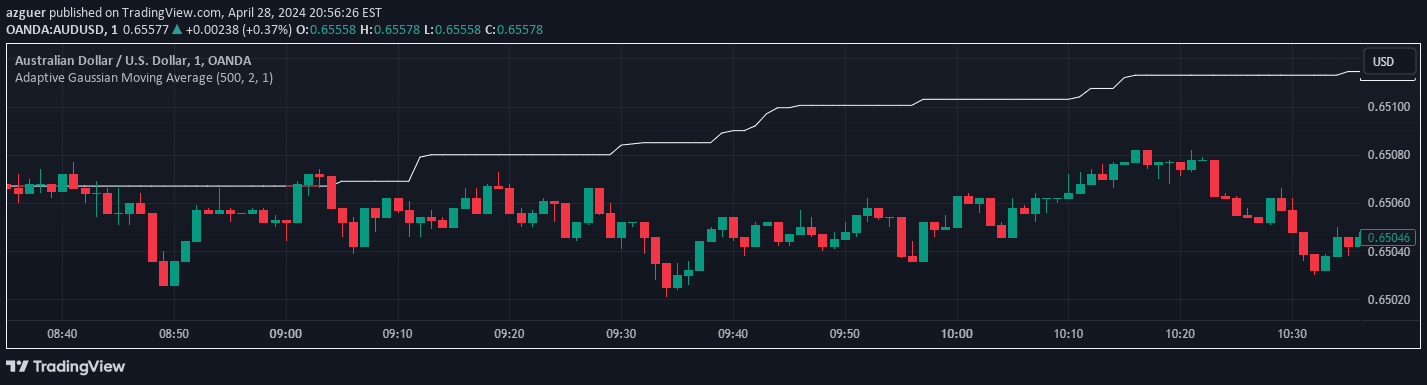
Kaufman's Adaptive Moving Average is a dynamic indicator that adjusts its sensitivity based on market volatility, providing responsive trend tracking and noise reduction.
Explore complementary indicator rolesHow it works
The Kaufman Adaptive Moving Average (KAMA) calculates an efficiency ratio by comparing price change to total price movement. This ratio determines a smoothing constant that dynamically adjusts the moving average's sensitivity to market conditions.
By measuring the efficiency of price movement, KAMA creates a more responsive indicator that adapts to market volatility. When markets trend strongly, the indicator becomes more sensitive, quickly tracking price changes, while in choppy or sideways markets, it slows down to filter out noise.
Why it may be useful
KAMA provides traders with a sophisticated alternative to traditional moving averages by intelligently responding to market dynamics. Its adaptive nature helps reduce false signals and lag, offering a more nuanced view of price trends that can improve trading decision-making.
Unlike static moving averages, KAMA's ability to adjust its sensitivity means traders can potentially capture more meaningful price movements while avoiding getting whipsawed in volatile or range-bound markets. This makes it a valuable tool for understanding underlying market trends more accurately.
When to explore it
KAMA works best in markets with clear directional movements, where its adaptive nature can quickly track emerging trends. It is particularly useful in identifying trend changes and potential momentum shifts across different timeframes and asset classes.
Traders should consider using KAMA when they want a more responsive trend indicator that can distinguish between meaningful price movements and market noise. It is especially effective in markets with varying volatility, such as forex, stocks, and cryptocurrencies.
Keep exploring
What we’ve verified
Access, alerts and repainting behaviour have not been independently verified for this indicator. Check the creator’s current publication and settings.
General descriptions and classifications are recovered research. Verified details above identify the specific checks we have completed. Check the creator’s current publication for later changes.