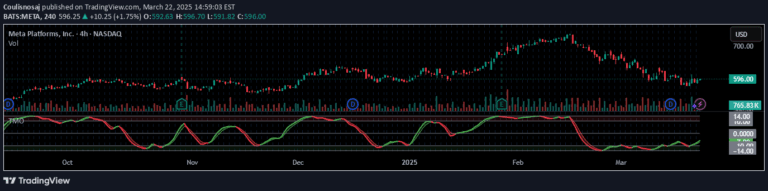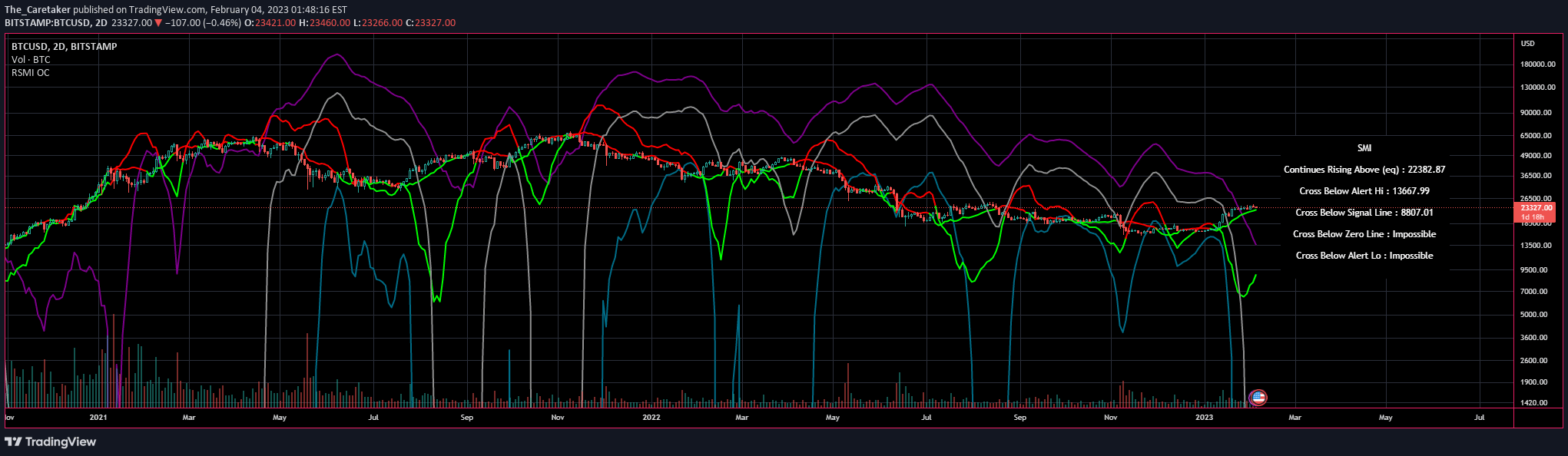
The Stochastic Momentum Index (SMI) is an advanced oscillator that measures price momentum by calculating the closing price's position relative to the high-low range.
Explore complementary indicator rolesHow it works
The SMI calculates the distance of the current closing price from the median of the high/low price range. It operates on a scale between +100 and -100, with positive values indicating the closing price is above the median and negative values below.
The indicator uses complex calculations to determine price momentum, comparing current price positions to historical price ranges. It incorporates a signal line to generate crossover signals. The SMI provides a more refined analysis of price movement compared to traditional stochastic oscillators
Why it may be useful
Traders use the SMI to identify potential trend reversals and momentum shifts in market prices. It helps traders understand the underlying strength of price movements beyond simple price action. The indicator can reveal hidden market dynamics by showing how closing prices relate to price ranges.
By providing clear signals at key levels like +40, -40, and the zero line, it offers precise entry and exit points. The SMI can be combined with other indicators to confirm trend direction and trading signals
When to explore it
The SMI works best in trending markets with clear momentum shifts. It is most effective when used on daily or weekly charts for swing trading strategies. Traders should apply the SMI in conjunction with other technical indicators to confirm signals.
It performs well in markets with consistent price ranges and identifiable trends. The indicator is particularly useful for identifying potential trend reversals and momentum changes. Combining the SMI with volume indicators can provide additional confirmation of market movements
Keep exploring
What we’ve verified
Access, alerts and repainting behaviour have not been independently verified for this indicator. Check the creator’s current publication and settings.
General descriptions and classifications are recovered research. Verified details above identify the specific checks we have completed. Check the creator’s current publication for later changes.