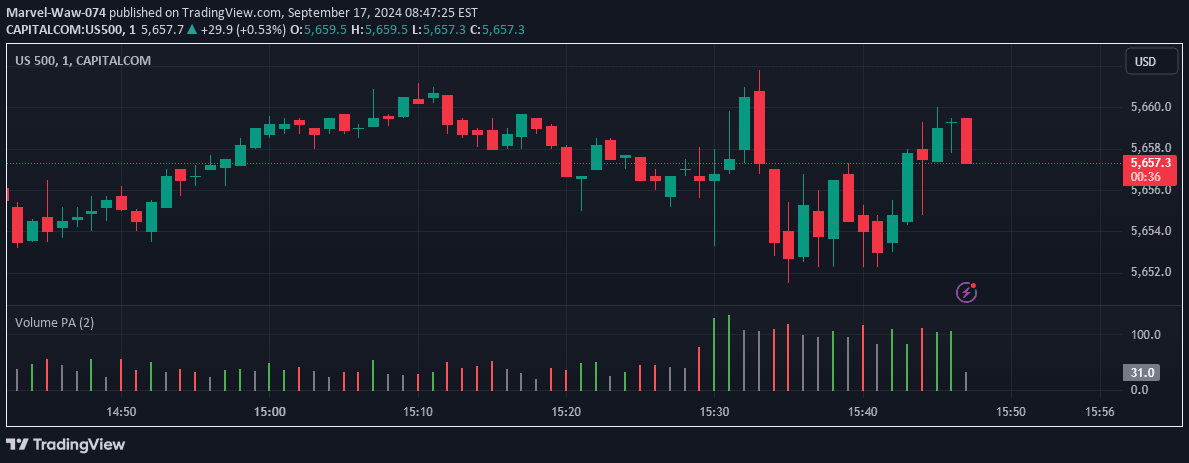
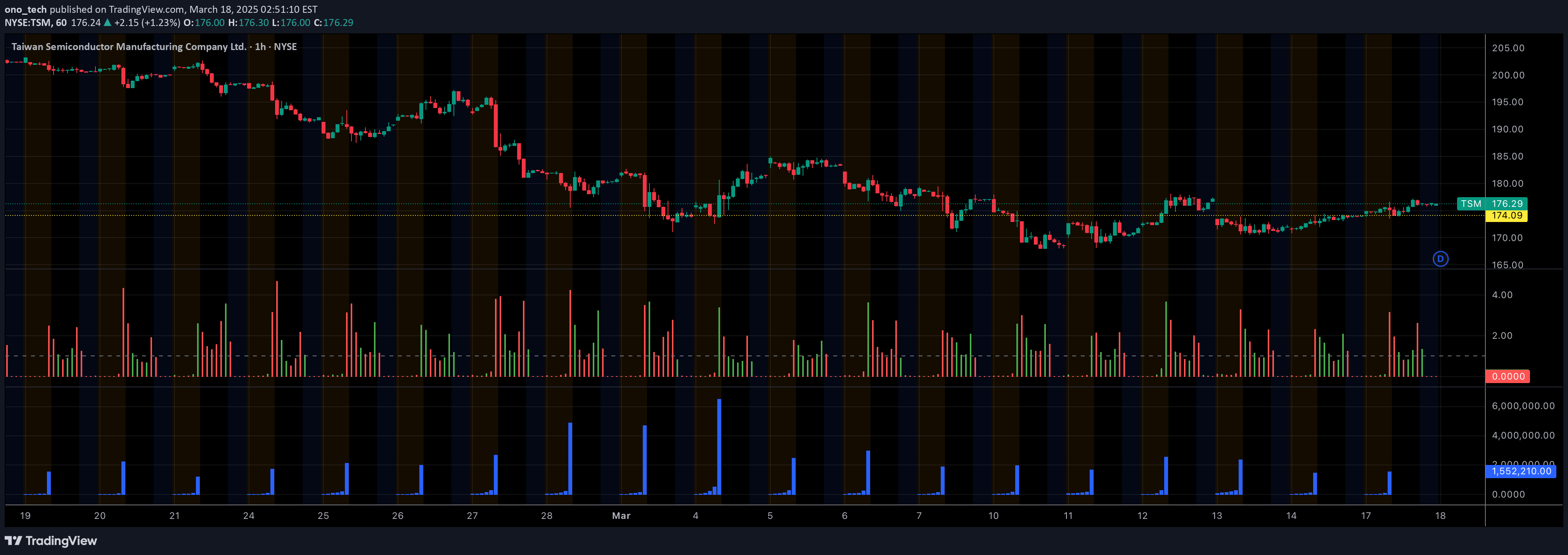
A volume projection indicator that estimates the expected trading volume for a session based on elapsed time, helping traders assess potential price movements and trade viability.
Explore complementary indicator rolesHow it works
The indicator calculates projected volume by proportionally comparing the elapsed session time to the total trading session time. It uses the current real volume and the known trading hours to estimate the expected volume by the end of the session.
On the last volume bar, the indicator displays the projected volume overlapping with the actual real-time volume. This allows traders to see the potential volume trajectory and compare it against current trading activity in real-time.
Why it may be useful
Volume projection helps traders validate the strength and potential of price movements by providing insight into expected trading activity. It offers a predictive view of market participation, which can confirm or challenge existing trading signals.
By understanding potential volume trends, traders can make more informed decisions about trade entry and exit points. The indicator provides a forward-looking perspective that goes beyond current market conditions, helping traders anticipate potential market momentum.
When to explore it
The volume projection indicator is most effective in markets with consistent trading hours, such as stocks, and in continuous markets like cryptocurrency and forex. It works best when used alongside other technical analysis tools to confirm trading signals.
Traders should pay special attention to this indicator when they observe low-volume intraday signals, as the projected daily volume can validate the potential of a trade. It is particularly useful for traders seeking to understand market participation and potential price movement strength.
Keep exploring
What we’ve verified
Access, alerts and repainting behaviour have not been independently verified for this indicator. Check the creator’s current publication and settings.
General descriptions and classifications are recovered research. Verified details above identify the specific checks we have completed. Check the creator’s current publication for later changes.