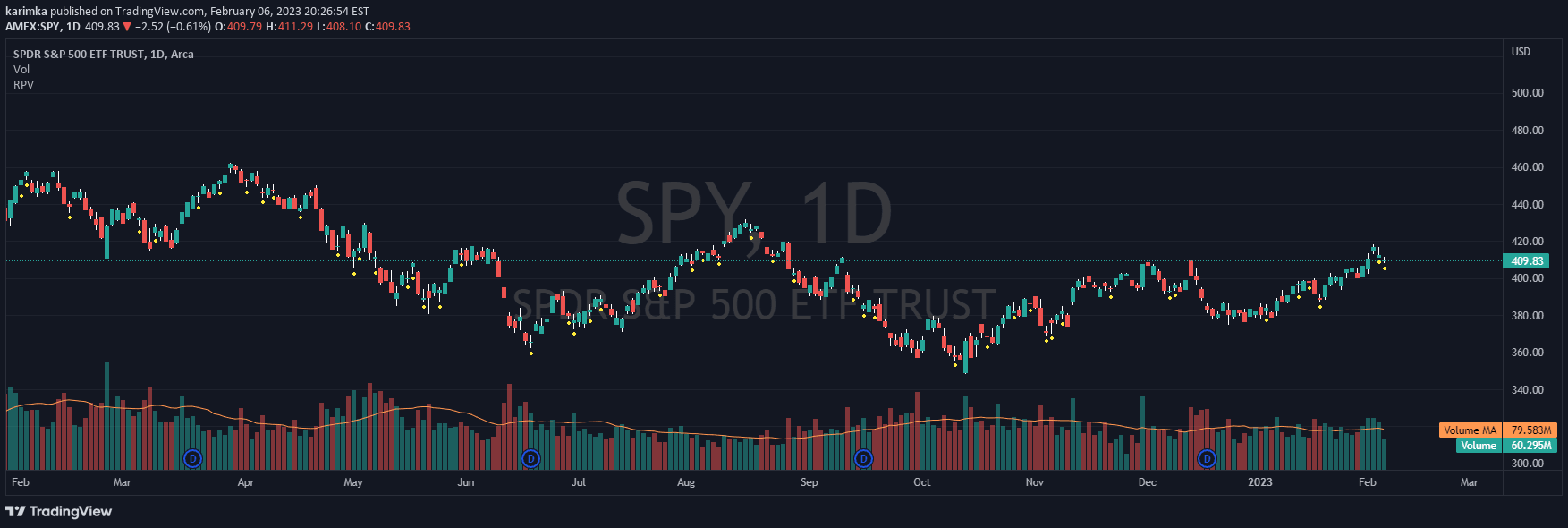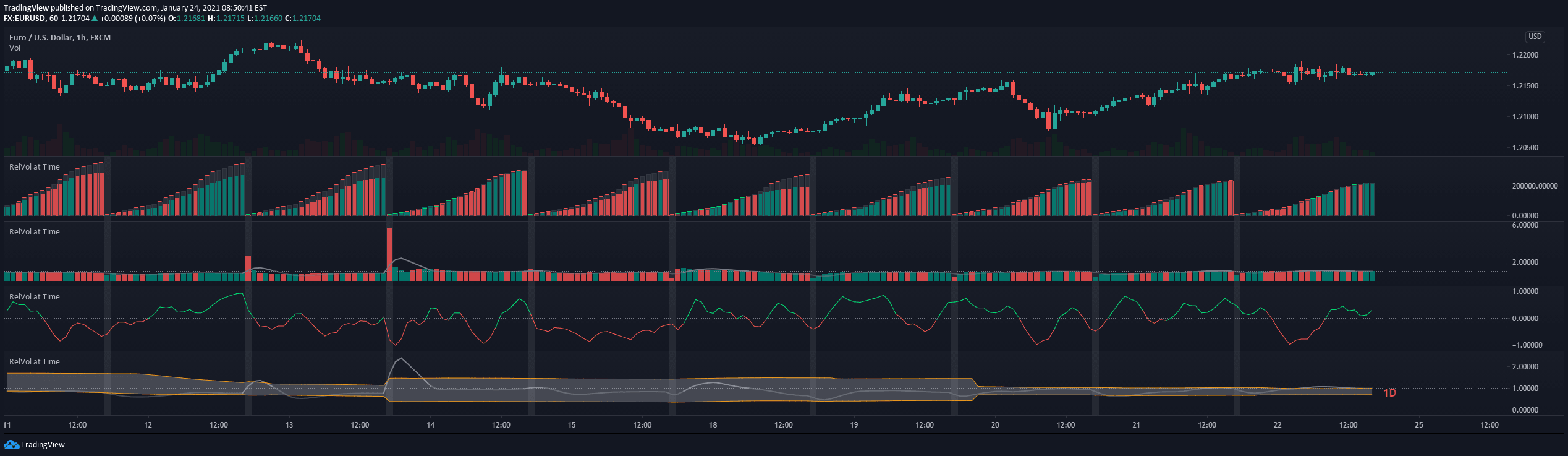
A sophisticated relative volume indicator that calculates current volume compared to past volume, offering multiple calculation modes and contextual analysis of trading activity.
Explore complementary indicator rolesHow it works
The relative volume indicator calculates volume ratios by comparing current volume to past volume using two distinct calculation modes. The first mode cumulates volume from the beginning of a timeframe, while the second compares point-to-point bar volumes.
It automatically adjusts timeframe units based on chart settings and can use fixed or dynamic thresholds. The indicator employs a Hull moving average to smooth volume calculations and provides multiple display modes like current volume columns, relative volume columns, and directional relative volume average
Why it may be useful
Relative volume provides traders with crucial insights into market activity by revealing changes in trading intensity beyond simple volume metrics. It helps identify potential market shifts, trading opportunities, and periods of increased market participation.
By comparing current volume against historical averages, traders can detect anomalies and potential trend confirmations. The indicator's contextual approach allows for more nuanced volume analysis across different market conditions and timeframes
When to explore it
This indicator works best in markets with consistent trading volume patterns, such as forex, futures, and actively traded stocks. It is particularly useful during market transitions, breakouts, and periods of potential trend reversals.
Traders should apply it when seeking to understand volume dynamics beyond traditional volume indicators. It excels in identifying unusual trading activity, confirming trend strength, and providing early signals of potential market movements
Keep exploring
What we’ve verified
Access, alerts and repainting behaviour have not been independently verified for this indicator. Check the creator’s current publication and settings.
General descriptions and classifications are recovered research. Verified details above identify the specific checks we have completed. Check the creator’s current publication for later changes.