A trading strategy combining Relative Strength line with moving averages to identify stock performance versus the S&P 500 and detect moments of strength and weakness in price movements.
Explore complementary indicator rolesHow it works
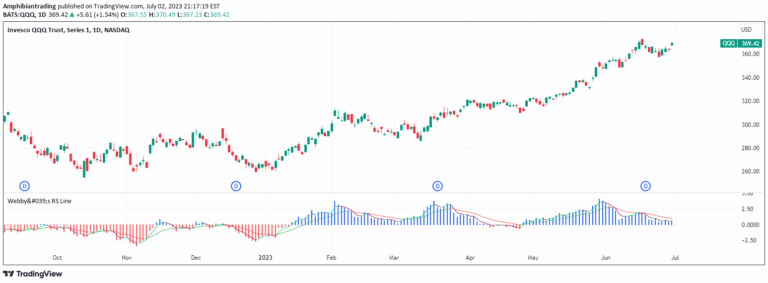
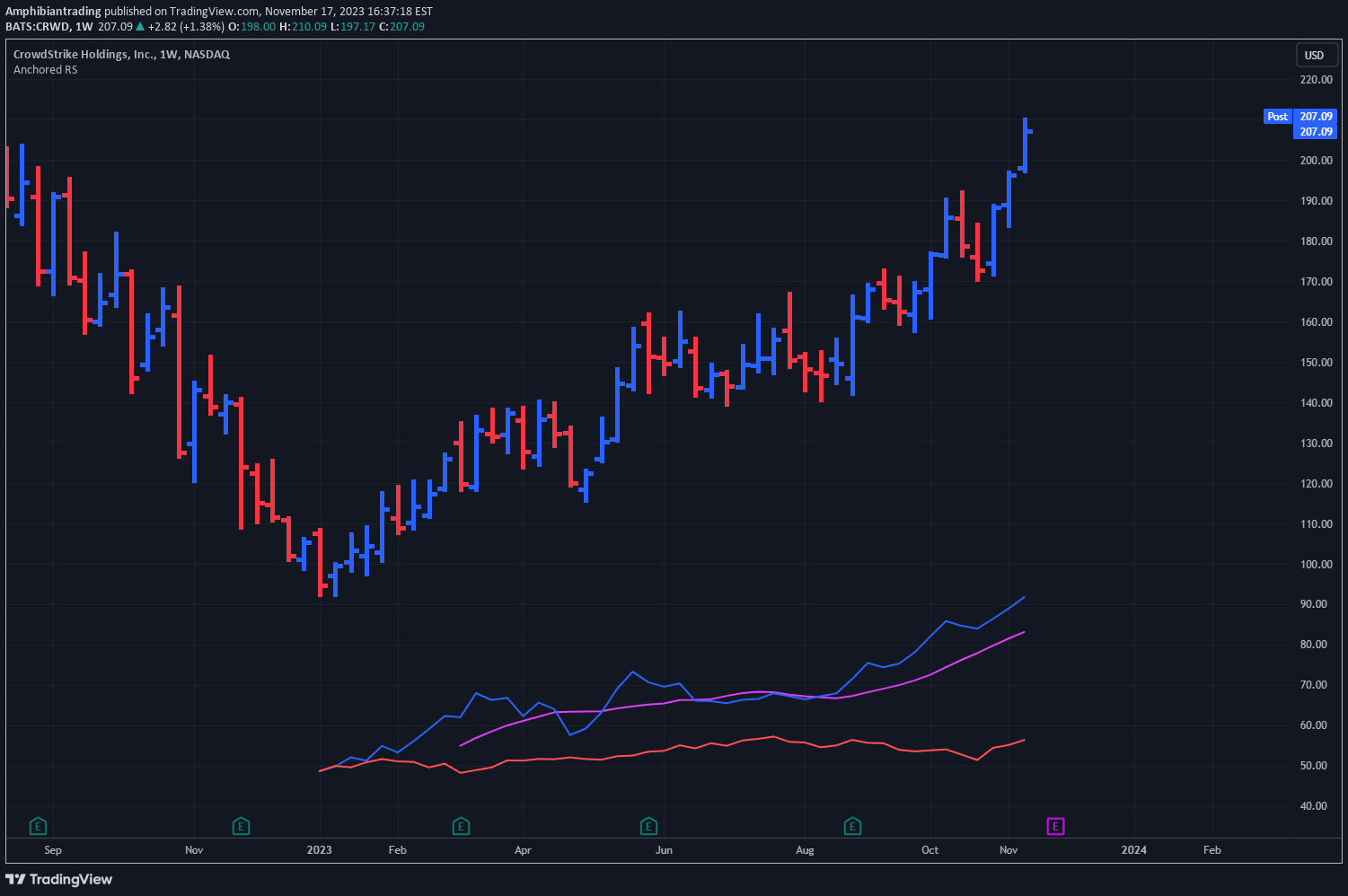
The Webby's Quick & Grateful Dead RS indicator calculates a Relative Strength line by dividing the stock's closing price by the S&P 500's closing price. This line reveals how a stock performs compared to the broader market index, showing relative strength or weakness.
The indicator then overlays two moving averages on the RS line, creating three distinct signals: Quick Break (RS line crosses below fast moving average), Quicksand (RS line moves lower than Quick Break point), and Grateful Dead Break (RS line crosses below slow moving average).
Why it may be useful
The Relative Strength line provides traders with a powerful tool to understand a stock's performance relative to the market benchmark. By comparing a stock's price movement to the S&P 500, traders can identify stocks that are outperforming or underperforming the broader market.
Adding moving averages to the RS line enhances trend analysis, allowing traders to detect subtle shifts in momentum and potential trend changes. This approach helps investors make more informed decisions about entering or exiting positions based on a stock's relative strength.
When to explore it
This indicator works best for swing traders looking to hold core positions in strong stocks over multi-day or multi-week periods. It is particularly useful when seeking to identify stocks that consistently outperform the market and maintain positive momentum.
Traders should use this signal in conjunction with other technical and fundamental analysis tools, paying close attention to the three key signals: Quick Break, Quicksand, and Grateful Dead Break. The indicator is most effective in trending market conditions where clear directional movements are present.
Keep exploring
What we’ve verified
Access, alerts and repainting behaviour have not been independently verified for this indicator. Check the creator’s current publication and settings.
General descriptions and classifications are recovered research. Verified details above identify the specific checks we have completed. Check the creator’s current publication for later changes.