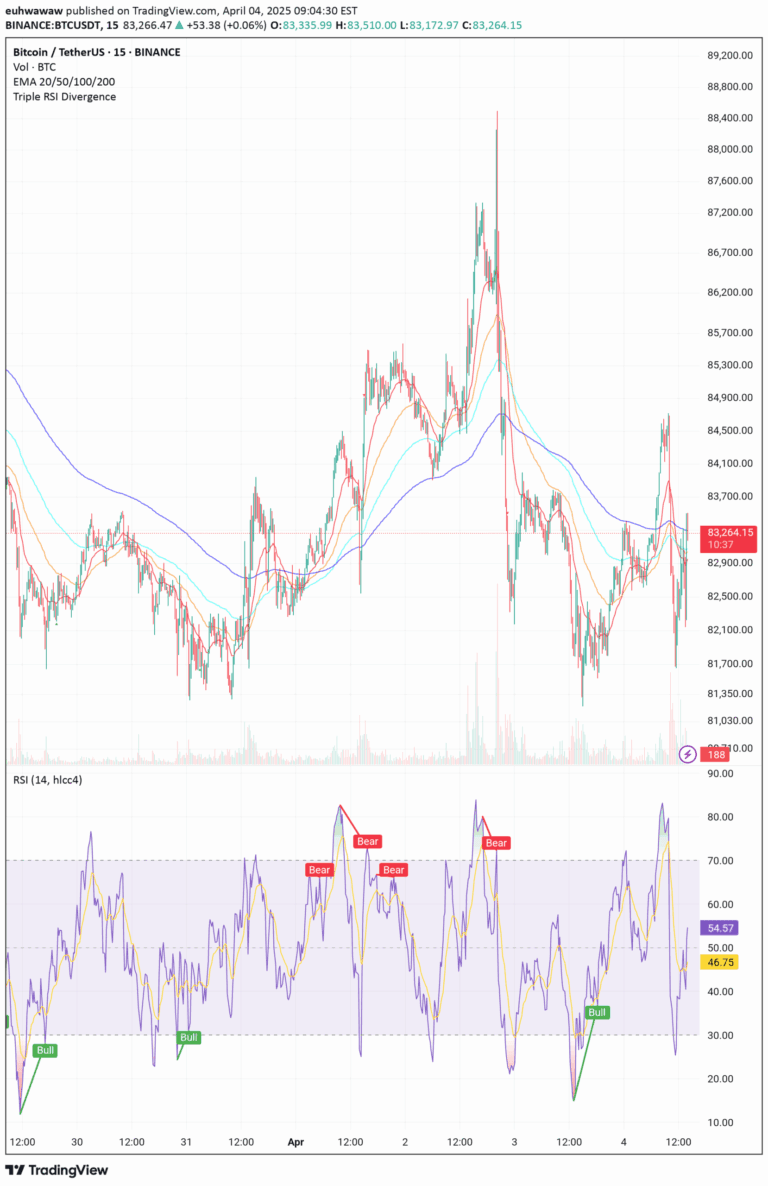
An adaptive RSI oscillator that dynamically adjusts calculation periods using ATR, offering responsive market insights through volume-based smoothing and divergence detection.
Explore complementary indicator rolesHow it works
The ATR Adaptive RSI Oscillator works by integrating Average True Range (ATR) with the Relative Strength Index (RSI) to create a more responsive technical analysis tool. It dynamically adjusts RSI calculation periods based on market volatility, using ATR to determine the appropriate length for more accurate signal generation.
The indicator also incorporates volume-based smoothing techniques, computing a time-decayed weighted moving average of RSI values across recent price bars. This approach helps reduce market noise and provides a clearer representation of trend strength by giving more weight to recent price movements and trading volumes.
Why it may be useful
The ATR Adaptive RSI Oscillator matters because it offers traders a more nuanced and flexible approach to momentum analysis compared to traditional RSI indicators. By adapting to changing market conditions, it provides more reliable signals that can help traders identify potential trend reversals and momentum shifts more accurately.
Its ability to dynamically adjust calculation periods and incorporate volume-based smoothing means traders can gain deeper insights into market dynamics across different timeframes and volatility environments. The added feature of divergence detection further enhances its utility by helping traders recognize potential trend changes before they fully manifest.
When to explore it
The ATR Adaptive RSI Oscillator is most effective in markets experiencing varying levels of volatility, where traditional fixed-period indicators might provide less reliable signals. It excels in identifying potential trend reversals and momentum shifts across different financial instruments and timeframes, making it versatile for multiple trading strategies.
Traders should consider using this indicator during periods of significant market movement, such as during economic announcements, earnings reports, or when trading instruments known for high volatility. Its adaptive nature makes it particularly useful for traders seeking a more responsive and context-aware momentum analysis tool.
Keep exploring
What we’ve verified
Access, alerts and repainting behaviour have not been independently verified for this indicator. Check the creator’s current publication and settings.
General descriptions and classifications are recovered research. Verified details above identify the specific checks we have completed. Check the creator’s current publication for later changes.